 David Gold has just beaten Jackie-Doyle Price and Eric Ollerenshaw to be selected as the candidate for Eltham. All three candidates were subjected to an interview by Michael Portillo as part of the interview process this evening. David fought one of the Brighton seats in 2001.
Monday, July 31, 2006
David Gold Selected for Eltham
David Gold has just beaten Jackie-Doyle Price and Eric Ollerenshaw to be selected as the candidate for Eltham. All three candidates were subjected to an interview by Michael Portillo as part of the interview process this evening. David fought one of the Brighton seats in 2001.

Ming & the Media
My favourite LibDem blogger Jonathan Calder has written an excellent piece for The Guardian today headlined LET MING BE MING, which you can read HERE. It's an incisive analysis of Ming Campbell's media problems.
Prescott Sued in Sex Harrassment Claim
As John Prescott recovers from his arduous weekend away he will have arrived back to find another little problem overshadowing his imminent takeover of the country. Ulster journalist Tricia McDaid has filed a claim of sexual harrassment against him, following her allegations in the Mail on Sunday a few months ago. The Belfast Telegraph has the story HERE and Guido has the lurid details HERE. Prescott's adviser describes rhe allegations as 'fantasy from beginning to end'. I'm sure Tracey Temple, Sarah Bissett Scott and Linda McDougall would testify that Mr Prescott's behaviour has been proper at all times. Yes indeedy.
UPDATE: A reader alerts me to this recent finding from the Press Complaints Commission...
Complaint:
Ms Sarah Bissett Scott of Hertfordshire complained that articles in several newspapers including the Daily Telegraph describing an alleged relationship between her and John Prescott were inaccurate in a large number of respects and used misleading terminology. She also said that some articles had misquoted her.
Resolution:
The matter was resolved when the newspaper noted the complainant's position as being: that there was no affair between her and Mr Prescott, that she was never his mistress, and she has neither taken nor been offered any advantage for herself, her professional or political standing nor for her business in this matter; and that reports that she “claimed to have had an affair with Mr Prescott” are untrue. The newspapers agreed to place a warning on their internal databases to the effect that a complaint to the PCC had been made and that details of the complaint could be found in the legal department, managing editor’s office or elsewhere.
UPDATE: A reader alerts me to this recent finding from the Press Complaints Commission...
Complaint:
Ms Sarah Bissett Scott of Hertfordshire complained that articles in several newspapers including the Daily Telegraph describing an alleged relationship between her and John Prescott were inaccurate in a large number of respects and used misleading terminology. She also said that some articles had misquoted her.
Resolution:
The matter was resolved when the newspaper noted the complainant's position as being: that there was no affair between her and Mr Prescott, that she was never his mistress, and she has neither taken nor been offered any advantage for herself, her professional or political standing nor for her business in this matter; and that reports that she “claimed to have had an affair with Mr Prescott” are untrue. The newspapers agreed to place a warning on their internal databases to the effect that a complaint to the PCC had been made and that details of the complaint could be found in the legal department, managing editor’s office or elsewhere.
Let's Scrap Ofcom Balance Rules
LBC 'Shock Jock' Nick Ferrari has written an excellent article in today's Independent calling for Ofcom rules preventing the creation of a UK version of Fox News to be scrapped. He reckons there is a real appetite for such a channel. Here's an excerpt from his article...
"Critics point to the pro-US right-wing slant of Fox, and say that's what makes it intolerable. Why? In ths country, newspapers like The Sun can happily exist alongside the Daily Mirror and the Daily Telegraph against The Independent. Why on earth can't that be the same with our television offerings? Or are we really saying that the Great British public are so brain-numbingly dumb they believe everything they see on the box? What an insult to our intelligence. No, we can consume a bit of Fox without the nation tyrning into a band of war-mongering neo-cons, I assure you.
" The other argument is even simpler. Put a pro-right (or pro-left) channel on air and if no one watches, the market will take care of business. After a costly relaunch and an even more expensive rejig of presenters, the doomed enterprise will collapse anyway."
Mainstream TV should not see the creation of such a channel as a threat. Indeed, I would not propose changing the rules for taxpayer funded channels or terrestrial TV. But we are moving away from the era of the mass media into the era of the niche, where every single minority interest is catered for. The only thing preventing this in the area of political comment and news coverage is Ofcom and its regulations demanding balance. Just as well no bright spark in Whitehall has thought of Ofblog, isn't it? Can you imagine it if blogging was afflicted by regulations demanding balance? If the Ofom rules were abolished we could enter a wonderful new era of political broadcasting which really would re-engage people currently lost to the political process. So roll on Fox News UK, Toynbee TV or, heaven forfend, the UKIP Channel.
"Critics point to the pro-US right-wing slant of Fox, and say that's what makes it intolerable. Why? In ths country, newspapers like The Sun can happily exist alongside the Daily Mirror and the Daily Telegraph against The Independent. Why on earth can't that be the same with our television offerings? Or are we really saying that the Great British public are so brain-numbingly dumb they believe everything they see on the box? What an insult to our intelligence. No, we can consume a bit of Fox without the nation tyrning into a band of war-mongering neo-cons, I assure you.
" The other argument is even simpler. Put a pro-right (or pro-left) channel on air and if no one watches, the market will take care of business. After a costly relaunch and an even more expensive rejig of presenters, the doomed enterprise will collapse anyway."
Mainstream TV should not see the creation of such a channel as a threat. Indeed, I would not propose changing the rules for taxpayer funded channels or terrestrial TV. But we are moving away from the era of the mass media into the era of the niche, where every single minority interest is catered for. The only thing preventing this in the area of political comment and news coverage is Ofcom and its regulations demanding balance. Just as well no bright spark in Whitehall has thought of Ofblog, isn't it? Can you imagine it if blogging was afflicted by regulations demanding balance? If the Ofom rules were abolished we could enter a wonderful new era of political broadcasting which really would re-engage people currently lost to the political process. So roll on Fox News UK, Toynbee TV or, heaven forfend, the UKIP Channel.
Sunday, July 30, 2006
Without a Trace: Top Telly
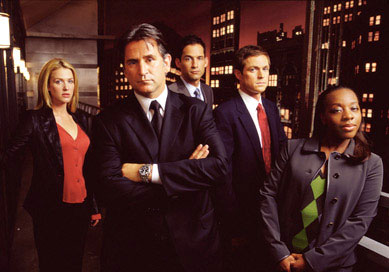 I'm currently watching the Season 3 DVD of Without a Trace. It's an American cop show about Missing Persons. Truly superb. It's a subject which has always interested me. More than 100,000 people disappear each year in this country. How is that possible? Where do they go? What becomes of them? It's difficult to imagine what their familes go through. If I'd become an MP it's a subject I'd want to devlop a specialist interest in. The great thing about Without a Trace is that it's almost totally devoid of the schmalzy sentiment normally associated with such programmes. Believe me, there's not always a happy ending. Some of the storylines are truly gut-wrenching. It's astonishing this series isn't shown on prime time. Instead it's hidden away on E4 or More4. Treat yourself to the first series on DVD. I guarantee you'll then buy the next two.
Blair & Eden: Spot the Difference
 image courtesy of TheoSpark
Fifty years ago a British Prime Minister lost the support of his Cabinet over a Middle East adventure. According to the Sunday newspapers, history could be about to repeat itself, with Jack Straw, David Miliband, Lord Grocott, Margaret Beckett and John Prescott all voicing doubts over his approach to the Middle East crisis.
Still, while the Foreign Secretary goes caravanning and the PM disappears for three weeks to Barbados (isn't that where Anthony Eden went to recover after he resigned?) we can all rejoice in the fact that the Deputy Prime Minister will be on hand to solve the diplomatic crisis. Personally, I would say it's a disproportionate response...
Mark Regev: A Star in the Making
 The man pictured is Mark Regev. He is the Israeli Foreign Affairs Ministry Spokesman, and if his 15 minute interview on this morning's Julian Worricker show on Radio 5 Live is anything to go by, he is a star in the making. Anyone who heard him would have been impressed, regardless of where they stand on the current dispute. Calm, honest and assured he answered every question put to him with a dignity and honesty unusual in Government spin doctors. I wouldn't be surprised to see him have a great future in Israeli politics. More on him HERE.
I didn't get much of a look-in on the programme, but to be honest, with what was going on in Beirut this morning I didn't expect to. However, I did get to put a question to former Clinton policy adviser Nancy Soderberg. She was heaping scorn on George Bush's foreign policy and asserting that he had not idea what diplomacy meant. She then said that Bush and the Israelis were at fault for not doing anything about Hezbollah much earlier, when they knew that they were digging in in Southern Lebanon. I asked her what she thought the reaction would have been if the Israelis had bombed Hezbollah positions a couple of years ago with no provokation at all. I said the Israelis had shown great restraint over the last few years but in the end their patience had snapped. I told her I thought it was a cheek for a Clinton advisor to criticise Bush for doing nothing about Hezbollah when if Clinton had acted more strongly against the Al Qaeda threat he could have possibly stubbed it out before it became so dangerous. She refuted that entirely and said that Clinton had tried to have bin Laden killed.
The decision by the Lebanese PM not to meet Condi Rice is probably a significant development. There's no doubt that it is a blow to US diplomatic efforts. But to those looking for a European initiative I would say to them that it is highly improbable. The positions of the British and French governments are totally unreconcilable. But while the British Foreign Secretary suns herself in her Derbyshire garden the Italian Foreign Minister is at least trying to do something. The Israelis will not agree to a ceasefire which would allow Hezbollah to rearm themselves with fresh supplies delivered through Syria via Iran. But there is a school of thought which thinks the Israelis should call Hezbollah's bluff and announce a 24 hour ceasfire to allow humanitarian aid through. They believe that Hezbollah would be very unlikely to respect such a ceasefire and if they didn't they would hand the moral high ground to Israel. I'm not sure what any of that would achieve, but I suppose it's possible. I cannot see what other conditions there might be for a ceasefire, but there's no doubt that this morning's attach which killed 37 children and 57 in all was a terrible error and must not be repeated. Israel can rightly say that it told civilians to leave Qana, and that Hezbollah were undoubtedly using the town as a launchpads for their rockets, but the scenes of devastation and carnage which have been shown all round the world following the attack are very damaging to the Israeli cause. We have a 24 hour news media which will devour such pictures with relish. Even the silky words of Mark Regev will not be enough to explain this sort of carnage.
The final part of the programme was a review to today's newspaper backpages. Julian Worricker asked me what my advice would be to Wayne Rooney when he meets Cristiano Ronaldo tomorrow in training for the first time since the World Cup. I said I would urge him to follow Alan Shearer's advice and 'deck him'. My Labour counterpart on the programme, Lorraine Davidson, went one further and urged him to 'nut him'. Such irresponsibility on national radio...!
Saturday, July 29, 2006
A Perfect Way to Start Your Sunday...
 Tune in to Radio 5 Live's Julian Worricker Programme between 10 and 1 and you'll get intermittent comments and interruptions from me, as well as a comprehensive review of the Sunday papers.
It'll be my first time on Julian's programme. He's also doing quite a bit of presenting on News 24 at the moment and this week interviewed George Michael about his midnight wanders round Hampstead Heath. I suspect we'll be talking about that as well as concentrating on what's happening in the Middle East.
Power Cuts Are a National Embarrassment
One of my first childhood memories was the power cuts of 1973-4. For a child they were rather fun - eating by candlelight, imagining what the blackout must have been like during the war. But thirtty years on power cuts may be returning. This week parts of central london were subjected to power rationing - which means they had their power turned off for four hours at a time. Businesses had to close, shops had to shut. All this is twenty first century Britain. It's something you might expect in a third world banana republic, not the world's fifth largest economy.
Apparently it is all to do with the power companies failing to anticipate the demand for energy during the hot weather. Obviously they don't look at weather forecasts. The Daily Telegraph tells us this morning that instead of 42,000 megawatts we will have used 44,000 megawatts of energy during July. That's a 5 per cent increase. Surely to God electricity companies ought to be able to cope with an unpredicted 5 per cent increase in demand? Have they not heard of the words 'spare' and capacity'? We're told that power stations sometimes go off line during the summer months for 'planned maintenance'. It's quite obvious that too many of them have been allowed to do so by whoever makes that sort of decision. And whoever that is ought to be fired. It's a national embarrassment.
PS And before we get the predictable comments in the Comments section about how privatisation must be to blame, save your breath. It's not. Two things have failed here - planning and regulation.
Apparently it is all to do with the power companies failing to anticipate the demand for energy during the hot weather. Obviously they don't look at weather forecasts. The Daily Telegraph tells us this morning that instead of 42,000 megawatts we will have used 44,000 megawatts of energy during July. That's a 5 per cent increase. Surely to God electricity companies ought to be able to cope with an unpredicted 5 per cent increase in demand? Have they not heard of the words 'spare' and capacity'? We're told that power stations sometimes go off line during the summer months for 'planned maintenance'. It's quite obvious that too many of them have been allowed to do so by whoever makes that sort of decision. And whoever that is ought to be fired. It's a national embarrassment.
PS And before we get the predictable comments in the Comments section about how privatisation must be to blame, save your breath. It's not. Two things have failed here - planning and regulation.
Friday, July 28, 2006
His Name is Rio and He's a Hammer to the Core

From Popbitch... Overheard at Ashley Cole's Stag Party...
Rio Ferdinand: "I don't care if any Mancs are listening... I'd go back to West Ham at the drop of a hat - I fucking loved the place."
I can but dream... And talking of dreaming, have you entered a team for my Fantasy League yet? 51 teams are taking part so far. I'll put up a prize of £100 worth of books and CDs for the winner. To enter a team (there's no charge!) click HERE. When you've registered your details, follow the instructions to select your team. When you've done that you need to join the Iain Dale League by typing this code 239252-43069 into the relevant box. You need to register before the season starts on 19 August.
Ruff-Cock Fills the Slot
Now I know you will think I have made this up, but it's for real...
Newtown Council Vacancy Filled 18/07/06
The casual vacancy on the Town Council has been filled by Mrs Vicky Ruff-Cock. Councillor Lewis will represent the Central ward. Councillor Ruff-Cock works for the Montgomeryshire Family Crisis Centre and has great interest in the town and its history. She is a member of the Monty Club and on the committee of the Friends of Penygloddfa School.
I kid you not. For official confirmation click HERE.
Newtown Council Vacancy Filled 18/07/06
The casual vacancy on the Town Council has been filled by Mrs Vicky Ruff-Cock. Councillor Lewis will represent the Central ward. Councillor Ruff-Cock works for the Montgomeryshire Family Crisis Centre and has great interest in the town and its history. She is a member of the Monty Club and on the committee of the Friends of Penygloddfa School.
I kid you not. For official confirmation click HERE.
LibDem News Publishes Pro Terrorist Letter
Following Ming Campbell's anti-Israeli comments on the Today Programme this morning (see Stephen Pollard) this week's Liberal Democrat News has published a letter which refers to Hamas fighters with the words "What courage, what determination!" and says that "Israelis are terrorists". While this is the view of only one member, the party has given it credence by publishing it in its weekly publication. The author, Paul Corney, is a senior LibDem in Norfolk. In fact I think I'm right in saying that he was Norman Lamb's agent at one time (but I stand to be corrected). I was at university with Mr Corney's son. This is the text of the letter...
Every comment I have read or heard refers to the "kidnapping" by Hamas of an Israeli soldier. No way was he kidnapped. He was captured by a small group of lightly armed irregular soldiers who tunnelled 300 yards under the frontier of the most security-conscious country in the world to penetrate a military base equipped with all sorts of heavy weaponry. Once there, they damaged a tank and another armoured vehicle, killed two of the tank crew and took prisoner a third, escaping with him through their home-made tunnel. What courage, what determination! I wonder what Hollywood would make of that! How many medals would we award, if the men had been ours? The shameful Israeli response has been to unleash all the resources of American military technology on the helpless citizens of the Gaza strip, quite deliberately destroying the infrastructure of that unhappy territory, and making the lives of its people virtually unliveable, and not for the first time. Now they follow up by doing exactly the same to Lebanon, targeting Hizbollah, Christians and civilians without any discrimination. The president of Lebanon has referred to the Israelis as terrorists. He is right.
Paul Corney
Norwich
Deluded. Are there any LibDems who are pro-Israeli? If so, they're staying very quiet.
UPDATE: Mark P in the Comments section tells me there was a pro-Israel letter on the same letters page. Happy to make that clear - sadly I don't actually see LibDem News each week as I gather only LibDem members can subscribe. I have its contents reported to me, obviously with varying degrees of accuracy!
UPDATE: I have now successfully subscribed to LibDem News without having to give a membership number. I am sure everyone will bve delighted that I can now give first hand reports without having to rely on others to tell me what's in it. I do hope my £30 subscription fee will go some way towards paying back the £2.4 million!
Every comment I have read or heard refers to the "kidnapping" by Hamas of an Israeli soldier. No way was he kidnapped. He was captured by a small group of lightly armed irregular soldiers who tunnelled 300 yards under the frontier of the most security-conscious country in the world to penetrate a military base equipped with all sorts of heavy weaponry. Once there, they damaged a tank and another armoured vehicle, killed two of the tank crew and took prisoner a third, escaping with him through their home-made tunnel. What courage, what determination! I wonder what Hollywood would make of that! How many medals would we award, if the men had been ours? The shameful Israeli response has been to unleash all the resources of American military technology on the helpless citizens of the Gaza strip, quite deliberately destroying the infrastructure of that unhappy territory, and making the lives of its people virtually unliveable, and not for the first time. Now they follow up by doing exactly the same to Lebanon, targeting Hizbollah, Christians and civilians without any discrimination. The president of Lebanon has referred to the Israelis as terrorists. He is right.
Paul Corney
Norwich
Deluded. Are there any LibDems who are pro-Israeli? If so, they're staying very quiet.
UPDATE: Mark P in the Comments section tells me there was a pro-Israel letter on the same letters page. Happy to make that clear - sadly I don't actually see LibDem News each week as I gather only LibDem members can subscribe. I have its contents reported to me, obviously with varying degrees of accuracy!
UPDATE: I have now successfully subscribed to LibDem News without having to give a membership number. I am sure everyone will bve delighted that I can now give first hand reports without having to rely on others to tell me what's in it. I do hope my £30 subscription fee will go some way towards paying back the £2.4 million!
How Environmentally Friendly Are You?
Thanks to Niles for pointing out THIS page from the Environment Agency Website. It tells us...You can make a small promise like turning off the tap when you brush your teeth or using a ‘bag for life’, or you could go further and promise to organise a green project in your community, or to offset your carbon emissions when you take a flight. Promise to do your bit and you can come back and see how much you’ve achieved. Recruit your friends to make a promise too, and between everyone, you can make a difference.
2. I promise to air my washing in public - not in the tumble dryer. I air enough dirty washing in public, thank you! I am not allowed near the washing machine in my house and wouldn't know what to do with it if I was...
3. I promise I will put a water saving device in my toilet. I just suggested that one to my partner. I will save you from the response.
4. I promise I will boil only the water I need, rather than filling the kettle every time. I don't use a kettle.
5. I promise I will turn the tap off when I brush my teeth. I do anyway.
6. I promise I will share my car journeys to work with a colleague, cycle or replace those car journeys with public transport at least once a week. Not applicable.
7. I promise to use rechargeable batteries instead of disposable ones. I already do on gadgets that take them.
8. I promise that I will pay back the environmental impact of any air travel I take. In what? Air miles? I fly very rarely indeed.
9. I promise to use a reusable bag when I shop, rather than plastic carriers. I might turn into Roy Cropper.
10. I promise I will organise or volunteer for an environmental project in my local community. I have helped create a natural habitat on the field next to where I live.
I'm not going to make promises I can't keep but I suppose it has made me think about a few things I do which I could do differently, which I guess is the whole point of it.
1. I promise I will take a shower instead of a bath. Easy one. I always shower. Can't remember the last time I had a bath!2. I promise to air my washing in public - not in the tumble dryer. I air enough dirty washing in public, thank you! I am not allowed near the washing machine in my house and wouldn't know what to do with it if I was...
3. I promise I will put a water saving device in my toilet. I just suggested that one to my partner. I will save you from the response.
4. I promise I will boil only the water I need, rather than filling the kettle every time. I don't use a kettle.
5. I promise I will turn the tap off when I brush my teeth. I do anyway.
6. I promise I will share my car journeys to work with a colleague, cycle or replace those car journeys with public transport at least once a week. Not applicable.
7. I promise to use rechargeable batteries instead of disposable ones. I already do on gadgets that take them.
8. I promise that I will pay back the environmental impact of any air travel I take. In what? Air miles? I fly very rarely indeed.
9. I promise to use a reusable bag when I shop, rather than plastic carriers. I might turn into Roy Cropper.
10. I promise I will organise or volunteer for an environmental project in my local community. I have helped create a natural habitat on the field next to where I live.
Vultures Start to Circle over Ming
A few weeks ago Ming Campbell berated Simon Hughes for giving him until the Party's September conference to get his act together. Hughes's view is now repeated by none other than Welsh AM and blogger Peter Black. He headlines his piece TIME FOR MING TO SHAPE UP... but leaves out the words OR SHIP OUT. But that's the clear implication of his piece. Time for an interview without coffee by Ming's CoS Norman Lamb, methinks...
When Charles Kennedy was forced out by MPs against the wishes of the membership, they gave as their reason that the party was going nowhere. They were dissatisfied with Charles' leadership style and with the impact of his 'health' issues.Now we have the MPs' choice as leader and yet, despite successes in Dunfermline and Bromley, our opinion poll ratings are stagnating and slipping back. Ming has made little impact with the public at large. The Parliamentary Party has effectively taken charge of our policy direction and strategy, whilst the leadership has established a lock on the party organisation irrespective of the party's democratic structures.Ming is playing for very high stakes and in doing so has placed a great deal of his personal authority on the line.
If things go wrong then there is nobody else to blame, he has made sure of that by the way he has gathered all the threads around him.The next few months are going to be critical. In a week or two we will be publishing tax plans that have largely been drawn up by the Treasury Team. Worthy as they are, these proposals seem unfocussed and lack a clear narrative. It is my hope that once we see the full details that will change. However, it did not help that Ming felt it necessary to reveal details before the Commission had reported or the democratically-elected Policy Committee had decided whether to accept them or not.The debate will, of course be critical but so too will Ming's performance at the Conference. We need to get some bounce in the polls out of that week in Brighton.
When Simon Hughes said that Ming had until the end of the Conference season to prove himself he was absolutely right. So far the only people who appear to be totally content with the leader are the MPs. They have to realise that, important as they are, they are not the Party. Having experienced a coup de grace at the top, we are entitled to expect results. It is now time for Ming Campbell to start delivering on his promises and the expectations of success that are associated with him.
The blog entry is on Peter Black AM's blog HERE. It's from 27 July.
UPDATE: I see the BBC have picked up on this story HERE. Hope it was nothing I said...
UPDATE: I didn't hear Sir Ming on the Today Programme, but Stephen Pollard did. This is his take...
But what fair took my breath away was his reaction to the conviction of Michael Brown, the man who has given £2.4 million to the LibDems. Asked if he was embarrassed, Sir Menzies replied that "these are matters which are sub judice" and then huffed that they "are not matters which are anything to do with the LibDems". No, of course not. It's nothing at all to do with the Lib Dems that one of their main donors is a crook, and they have no intention of returning the money. As I have pointed out before, the LibDem's website says this: Unlike the other main parties, the Liberal Democrats do not receive funding from big business or trade unions. But fraudsters are just fine. I don't understand why people say Sir Menzies isn't fit to be LibDem leader. He's a hypocrite in charge of a hypocritical party. Seems like a perfect fit to me.
When Charles Kennedy was forced out by MPs against the wishes of the membership, they gave as their reason that the party was going nowhere. They were dissatisfied with Charles' leadership style and with the impact of his 'health' issues.Now we have the MPs' choice as leader and yet, despite successes in Dunfermline and Bromley, our opinion poll ratings are stagnating and slipping back. Ming has made little impact with the public at large. The Parliamentary Party has effectively taken charge of our policy direction and strategy, whilst the leadership has established a lock on the party organisation irrespective of the party's democratic structures.Ming is playing for very high stakes and in doing so has placed a great deal of his personal authority on the line.
If things go wrong then there is nobody else to blame, he has made sure of that by the way he has gathered all the threads around him.The next few months are going to be critical. In a week or two we will be publishing tax plans that have largely been drawn up by the Treasury Team. Worthy as they are, these proposals seem unfocussed and lack a clear narrative. It is my hope that once we see the full details that will change. However, it did not help that Ming felt it necessary to reveal details before the Commission had reported or the democratically-elected Policy Committee had decided whether to accept them or not.The debate will, of course be critical but so too will Ming's performance at the Conference. We need to get some bounce in the polls out of that week in Brighton.
When Simon Hughes said that Ming had until the end of the Conference season to prove himself he was absolutely right. So far the only people who appear to be totally content with the leader are the MPs. They have to realise that, important as they are, they are not the Party. Having experienced a coup de grace at the top, we are entitled to expect results. It is now time for Ming Campbell to start delivering on his promises and the expectations of success that are associated with him.
The blog entry is on Peter Black AM's blog HERE. It's from 27 July.
UPDATE: I see the BBC have picked up on this story HERE. Hope it was nothing I said...
UPDATE: I didn't hear Sir Ming on the Today Programme, but Stephen Pollard did. This is his take...
But what fair took my breath away was his reaction to the conviction of Michael Brown, the man who has given £2.4 million to the LibDems. Asked if he was embarrassed, Sir Menzies replied that "these are matters which are sub judice" and then huffed that they "are not matters which are anything to do with the LibDems". No, of course not. It's nothing at all to do with the Lib Dems that one of their main donors is a crook, and they have no intention of returning the money. As I have pointed out before, the LibDem's website says this: Unlike the other main parties, the Liberal Democrats do not receive funding from big business or trade unions. But fraudsters are just fine. I don't understand why people say Sir Menzies isn't fit to be LibDem leader. He's a hypocrite in charge of a hypocritical party. Seems like a perfect fit to me.
Top Ten Things for John Prescott To Do When Minding the Shop
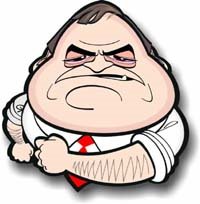
9. Sort out the Home Office
8. Solve the probably railways strike
7. Manage to avoid touching up office staff
6. Avoid any kind of TV or radio interview
5. Hide Hazel Blears & Jacqui Smith in a cupboard
4. Sell the stetson on Ebay
3. Sort out the Middle East
2. Divert Israeli bombers to Barbados so the temporary job turns into something a little more permanent
1. (In the end) Resign
The Sting for Ming
The papers are full of reports from Southwark Crown Court yesterday, where LibDem donor Michael Brown pleaded guilty to passport forgery. The Times reckons the LibDems are in deep doodoo.
His conviction will increase pressure on the Lib Dems to repay the £2.4 million donation from Brown’s company, 5th Avenue Partners Ltd. The Times has also learnt that Lib Dem officials will be interviewed about the donation by detectives investigating suspected money-laundering. His conviction comes as a City of London police investigation widens into alleged money-laundering involving 5th Avenue. Brown gave the Lib Dems £2.4 million in February and April of last year. He was banned by law from making political donations as an individual because he is not on the British electoral roll. The Lib Dems instead received the donation as a corporate gift from his company. The Times has learnt that the gift was offered around the time the businessman flew the party leader by private jet to and from the party’s spring conference in Harrogate in the run-up to last year’s general election. A senior Lib Dem source has now disclosed that party officials learnt about Mr Brown’s gift on March 7, the day after the leader flew back with the Scotsman. Mr Kennedy’s office was “absolutely” aware of the huge gift. “The offer went to the leader’s office,” the source said. A party official said: “This has nothing to do with the Liberal Democrats.” The party’s lawyers say that it was reasonable to treat the gift as permissible. The Electoral Commission said that it was awaiting the result of the police inquiry before making a final decision on whether the Lib Dems could keep the money.
The Times also devotes a Leader to the subject under the headline STING FOR MING...
Liberal Democrats will curse the day they ever heard the name Michael Brown. The party’s rank and file should certainly be cursing the day their senior party officials accepted £2.4 million from Mr Brown without checking sufficiently who he was, where his money came from and why he was giving such a large proportion of it away. Mr Brown’s pleas of guilty at Southwark Crown Court to charges of perjury and passport fraud makes a party that enjoys lecturing others look at best woefully incompetent and at worst downright sleazy.
The immediate lessons are for the Liberal Democrats. Mr Brown’s money began arriving into party coffers from a Swiss bank account, via a company that did not have an office in the UK, and when Mr Brown was not registered to vote in this country. Some of those responsible for this highly irregular, not to say legally dubious, arrangement remain in Lib Dem HQ. They should be moved on.
Although Mr Brown’s pleas of guilty and the 30 other charges that will remain on file did not concern the origins of his wealth, the Liberal Democrats should feel under considerable moral pressure to divest themselves of the money. This is easier said than done, because the cash left Lib Dem coffers almost as soon as it arrived last year, to be blown on largely pointless campaign posters and other election fripperies. But the party will find it difficult to convince voters of its righteousness while this stain remains. The Electoral Commission could hold the money until it is decided to whom it should be returned. The party could expect time and understanding as to how it manages this process.
The wider lessons of the Brown case are for the overall “policing” of political donations, and are timely, given Labour’s cash-for-peerages travails and the review of party funding being conducted by Sir Hayden Phillips. At the moment, donations are not so much policed as observed. There is little point in the Electoral Commission taking a view on a donation after the money has been spent, which is all it can do currently. It needs “real time” authority, allowing it to veto high- value donations. And it should publish all its deliberations immediately. Voters have a right to know who is funding their preferred party before, rather than after, they cast their ballot.
Mr Brown is part of a vicious circle into which all parties have been sucked. The more that donation scandals tarnish the political process, the less ordinary voters and well-meaning business people are inclined to donate to parties, and the more the parties feel the need to turn to dodgy money. Only caps on donations, at about £50,000, and a ceiling on party spending, of about £6 million a year, will force the parties to cut their bloated budgets and reconnect with the public.
Bad though this has been for the Liberal Democrats, it could have been worse: revelations by The Times about Mr Brown’s personal and financial background could have come later, when he had been proposed for a peerage — or worse, already sitting proudly in the House of Lords.
His conviction will increase pressure on the Lib Dems to repay the £2.4 million donation from Brown’s company, 5th Avenue Partners Ltd. The Times has also learnt that Lib Dem officials will be interviewed about the donation by detectives investigating suspected money-laundering. His conviction comes as a City of London police investigation widens into alleged money-laundering involving 5th Avenue. Brown gave the Lib Dems £2.4 million in February and April of last year. He was banned by law from making political donations as an individual because he is not on the British electoral roll. The Lib Dems instead received the donation as a corporate gift from his company. The Times has learnt that the gift was offered around the time the businessman flew the party leader by private jet to and from the party’s spring conference in Harrogate in the run-up to last year’s general election. A senior Lib Dem source has now disclosed that party officials learnt about Mr Brown’s gift on March 7, the day after the leader flew back with the Scotsman. Mr Kennedy’s office was “absolutely” aware of the huge gift. “The offer went to the leader’s office,” the source said. A party official said: “This has nothing to do with the Liberal Democrats.” The party’s lawyers say that it was reasonable to treat the gift as permissible. The Electoral Commission said that it was awaiting the result of the police inquiry before making a final decision on whether the Lib Dems could keep the money.
The Times also devotes a Leader to the subject under the headline STING FOR MING...
Liberal Democrats will curse the day they ever heard the name Michael Brown. The party’s rank and file should certainly be cursing the day their senior party officials accepted £2.4 million from Mr Brown without checking sufficiently who he was, where his money came from and why he was giving such a large proportion of it away. Mr Brown’s pleas of guilty at Southwark Crown Court to charges of perjury and passport fraud makes a party that enjoys lecturing others look at best woefully incompetent and at worst downright sleazy.
The immediate lessons are for the Liberal Democrats. Mr Brown’s money began arriving into party coffers from a Swiss bank account, via a company that did not have an office in the UK, and when Mr Brown was not registered to vote in this country. Some of those responsible for this highly irregular, not to say legally dubious, arrangement remain in Lib Dem HQ. They should be moved on.
Although Mr Brown’s pleas of guilty and the 30 other charges that will remain on file did not concern the origins of his wealth, the Liberal Democrats should feel under considerable moral pressure to divest themselves of the money. This is easier said than done, because the cash left Lib Dem coffers almost as soon as it arrived last year, to be blown on largely pointless campaign posters and other election fripperies. But the party will find it difficult to convince voters of its righteousness while this stain remains. The Electoral Commission could hold the money until it is decided to whom it should be returned. The party could expect time and understanding as to how it manages this process.
The wider lessons of the Brown case are for the overall “policing” of political donations, and are timely, given Labour’s cash-for-peerages travails and the review of party funding being conducted by Sir Hayden Phillips. At the moment, donations are not so much policed as observed. There is little point in the Electoral Commission taking a view on a donation after the money has been spent, which is all it can do currently. It needs “real time” authority, allowing it to veto high- value donations. And it should publish all its deliberations immediately. Voters have a right to know who is funding their preferred party before, rather than after, they cast their ballot.
Mr Brown is part of a vicious circle into which all parties have been sucked. The more that donation scandals tarnish the political process, the less ordinary voters and well-meaning business people are inclined to donate to parties, and the more the parties feel the need to turn to dodgy money. Only caps on donations, at about £50,000, and a ceiling on party spending, of about £6 million a year, will force the parties to cut their bloated budgets and reconnect with the public.
Bad though this has been for the Liberal Democrats, it could have been worse: revelations by The Times about Mr Brown’s personal and financial background could have come later, when he had been proposed for a peerage — or worse, already sitting proudly in the House of Lords.
Thursday, July 27, 2006
EXCLUSIVE: Keith Simpson Adopted for Broadland Seat
 Good news from Norfolk this evening. My friend Keith Simpson has been unanimously adopted for the new Broadland seat by the local Association (Shadow) Executive. Keith's Mid Norfolk seat is being split in two. The Broadland seat comprises 60% of his current seat plus the Fakenham, Walsingham and Melton Constable areas from my old stamping ground of North Norfolk. Very confusingly the new Mid Norfolk seat only has 40% of the old Mid Norfolk seat in it, but takes in parts of South West Norfolk and South Norfolk, including Wymondham, where I lived when I was at university. (And that's not a hint that I want to apply for it, before you infer anything). The Broadland seat has a notional Conservative majority of around 5,000. It's a huge, narrow seat - even longer than North Norfolk. It stretches right from Fakenham almost to Great Yarmouth. Keith's a very lucky man and I'm delighted for him.
Dear Uncle Iain: Can I Trust the Chief Executive?
Dear Uncle Iain,
I was appointed Finance Director on the same day (almost ten years ago now) as my best friend became our Chief Executive, and there was an understanding with the shareholders (confirmed a couple of times at AGMs) that in due course I would step up to the top job. This has still not happened, and I’m becoming rather bored. Since those early days my life has changed. I’ve married and started a family, and begun to realise that there’s a world beyond the job. At work, I’m becoming concerned that my boss has been involved in some dubious transactions (without telling the Board), and may ultimately have to quit – leaving me to sort out his mess.
We’re trying to avoid things coming to head with the shareholders – we really don’t want an EGM ahead of schedule – but within the outfit there are lots of junior managers who want me to ease our Chief Executive out before the auditors find something concrete. Here’s my problem. After all this time I’m not at all sure I actually want the top job anymore. I’m afraid that I’ll end up fighting fires (perhaps unsuccessfully) only to find that the shareholders agree a takeover that leaves me out of work in a couple of years, looking stupid or crooked or both. But it’s been assumed for so long that the post was mine that I’m worried about losing face with everybody.
Each time the boss screws up, the lads all urge me to do something; each time I have to find some new excuse for sitting tight. It’s becoming highly embarrassing. The thing is, all the exciting New Product launches are behind us, and the market has become saturated. Our competitors’ offerings seem to me quite inferior – but they have a novelty that catches the eye and makes our stuff look rather tired. Renewing the range is going to be tough while maintaining current output, and we have an alarming tail of liabilities from previous product lines that makes the true balance-sheet pretty alarming reading. And don’t even start me on the pensions thing.
Some mornings, I think that some smooth young CEO wannabe deserves this particular set of hospital passes – he’s welcome to the grief he’ll certainly come to. But my dad brought me up to face responsibilities and I don’t want to let people down – even if my heart isn’t truly in it. Should I be honest and say I’m not interested? Will they fire me straight away if I do? Am I too old to make a career shift into a new sector? And if I could move, where do you suggest I should be aiming? I really don’t know what I could do now, after all these years in a dead-end FD job.
Name and address supplied,
London SW1A
PS Do you think my accent counts against me?
DearGordonAnonymous,
You're obviously in denial. Of course you're interested. Of course you want the job. Your whole career has been for nothing if you do not seize the moment. But enjoy it while you can. The company is heading for the rocks and you, as the FD, know that better than anyone. But even if you only get to have the job for a few months, at least you can say you've done it. And the memoirs will be more valuable won't they? Every cloud, and all that. Don't be afraid of an EGM. Feedback seems to be that the shareholders will want you out, but you've got plenty of time to expose the weaknesses of the Marketing Director. Admittedly the Chief Exec has prevented you from taking him on, but a bit more strategising from the Logistics Executive might be in order, although perhaps references to pigs and lipstick might best be avoided in future. Of the Chief Exec is indeed interviewed by the forces of law and order, my recommendation would be to call an Emergency Board Meeting and call a vote of confidence in him. You really have nothing to lose. Or do you?
Yours Ever
Iain
If you have a problem which you'd like our host to help you with, please send an email to iain AT iaindale DOT com
I was appointed Finance Director on the same day (almost ten years ago now) as my best friend became our Chief Executive, and there was an understanding with the shareholders (confirmed a couple of times at AGMs) that in due course I would step up to the top job. This has still not happened, and I’m becoming rather bored. Since those early days my life has changed. I’ve married and started a family, and begun to realise that there’s a world beyond the job. At work, I’m becoming concerned that my boss has been involved in some dubious transactions (without telling the Board), and may ultimately have to quit – leaving me to sort out his mess.
We’re trying to avoid things coming to head with the shareholders – we really don’t want an EGM ahead of schedule – but within the outfit there are lots of junior managers who want me to ease our Chief Executive out before the auditors find something concrete. Here’s my problem. After all this time I’m not at all sure I actually want the top job anymore. I’m afraid that I’ll end up fighting fires (perhaps unsuccessfully) only to find that the shareholders agree a takeover that leaves me out of work in a couple of years, looking stupid or crooked or both. But it’s been assumed for so long that the post was mine that I’m worried about losing face with everybody.
Each time the boss screws up, the lads all urge me to do something; each time I have to find some new excuse for sitting tight. It’s becoming highly embarrassing. The thing is, all the exciting New Product launches are behind us, and the market has become saturated. Our competitors’ offerings seem to me quite inferior – but they have a novelty that catches the eye and makes our stuff look rather tired. Renewing the range is going to be tough while maintaining current output, and we have an alarming tail of liabilities from previous product lines that makes the true balance-sheet pretty alarming reading. And don’t even start me on the pensions thing.
Some mornings, I think that some smooth young CEO wannabe deserves this particular set of hospital passes – he’s welcome to the grief he’ll certainly come to. But my dad brought me up to face responsibilities and I don’t want to let people down – even if my heart isn’t truly in it. Should I be honest and say I’m not interested? Will they fire me straight away if I do? Am I too old to make a career shift into a new sector? And if I could move, where do you suggest I should be aiming? I really don’t know what I could do now, after all these years in a dead-end FD job.
Name and address supplied,
London SW1A
PS Do you think my accent counts against me?
Dear
You're obviously in denial. Of course you're interested. Of course you want the job. Your whole career has been for nothing if you do not seize the moment. But enjoy it while you can. The company is heading for the rocks and you, as the FD, know that better than anyone. But even if you only get to have the job for a few months, at least you can say you've done it. And the memoirs will be more valuable won't they? Every cloud, and all that. Don't be afraid of an EGM. Feedback seems to be that the shareholders will want you out, but you've got plenty of time to expose the weaknesses of the Marketing Director. Admittedly the Chief Exec has prevented you from taking him on, but a bit more strategising from the Logistics Executive might be in order, although perhaps references to pigs and lipstick might best be avoided in future. Of the Chief Exec is indeed interviewed by the forces of law and order, my recommendation would be to call an Emergency Board Meeting and call a vote of confidence in him. You really have nothing to lose. Or do you?
Yours Ever
Iain
If you have a problem which you'd like our host to help you with, please send an email to iain AT iaindale DOT com
Local Man Wins South Dorset Selection
Local non A-Lister Richard Drax has won through against two A List women in South Dorset tonight.
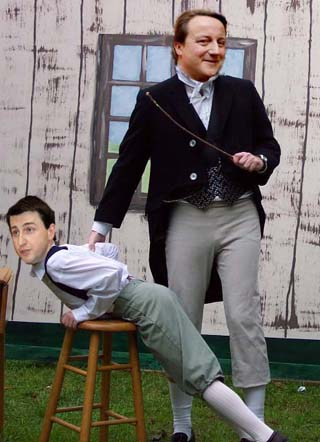

Douglas Alexander Wears Girls Knickers
Douglas Alexander wears girl's knickers: that's the response I am tempted to give to his ridiculous speech yesterday in which he said David Cameron was like a pig wearing lipstick. Clearly, it's the kind of language Mr Alexander understands. Is this really the level of political invective to re-engage the electorate? Surely all it does is invite ridicule and contempt.
Over the last few months Labour has attacked David Cameron as a chameleon, a sleazy estate agent (thus alienating around 70,000 estate agents in one go) and now a pig. Desperate times call for desperate measures, I suppose.
On the day the Guardian publishes a poll showing the Conservatives at their highest level for 13 years, diddy Duggie Alexander really believes that calling Cameron a pig in lipstick will knock dishy Dave off his perch.
To his credit, Cameron has not hit back at any of these pathetic attacks. He embraced the chameleon, ignored the estate agent jibe and must be laughing his socks off at the pig.
So why did Alexander frame his attack in this way? Simple: to get a headline. Well, he succeeded in doing that, but he made himself look ridiculous in the process. Douglas Alexander is supposed to be one of Gordon Brown's closest allies. He is also a cabinet minister. For a blogger or a junior backbench MP to make such an attack might be understandable, but for cabinet minister it demeans him and his office.
But Cameron also came under fire yesterday from a different source. Norman Tebbit has written a column in the Spectator criticising the Tory leader for ignoring his core vote. He says it's all very well to appeal to the chattering classes on Comment is free, but if Cameron ignores the foaming-at-the-mouth right he will live to regret it. Tebbit reckons Cameron is losing support in droves on the right and failing to replace it from the centre. This attack might have hit home a little better had it not been made on the day the Guardian published a poll showing the Conservatives at their highest level in the polls for 13 years.
I yield to no one in my admiration for Norman Tebbit, but like many of the scorched earthers in the Cornerstone group, he fails to understand that all political parties are coalitions, and that the trouble with the Conservatives over the last three elections is that the coalition has been too narrow. Instead of a big tent, the Conservative party has resembled a teepee. Cameron's challenge now is to transform the tent into a bloody great marquee.
Gordon Brown is rumoured to want to take the gloves off in dealing with David Cameron. but his allies reckon he is being thwarted by Downing Street. I have no idea what the truth is, but if calling Cameron a pig wearing lipstick is taking the gloves off, I'd love to see what Douglas Alexander does when he really swings his handbag at dawn. I bet David Cameron is quaking in his hoodie.
If Alexander wants to know how to attack the opposition, he should make an appointment to see Norman Tebbit (though Norman might bite his legs).
This piece was originally posted earlier on Comment is Free.
Over the last few months Labour has attacked David Cameron as a chameleon, a sleazy estate agent (thus alienating around 70,000 estate agents in one go) and now a pig. Desperate times call for desperate measures, I suppose.
On the day the Guardian publishes a poll showing the Conservatives at their highest level for 13 years, diddy Duggie Alexander really believes that calling Cameron a pig in lipstick will knock dishy Dave off his perch.
To his credit, Cameron has not hit back at any of these pathetic attacks. He embraced the chameleon, ignored the estate agent jibe and must be laughing his socks off at the pig.
So why did Alexander frame his attack in this way? Simple: to get a headline. Well, he succeeded in doing that, but he made himself look ridiculous in the process. Douglas Alexander is supposed to be one of Gordon Brown's closest allies. He is also a cabinet minister. For a blogger or a junior backbench MP to make such an attack might be understandable, but for cabinet minister it demeans him and his office.
But Cameron also came under fire yesterday from a different source. Norman Tebbit has written a column in the Spectator criticising the Tory leader for ignoring his core vote. He says it's all very well to appeal to the chattering classes on Comment is free, but if Cameron ignores the foaming-at-the-mouth right he will live to regret it. Tebbit reckons Cameron is losing support in droves on the right and failing to replace it from the centre. This attack might have hit home a little better had it not been made on the day the Guardian published a poll showing the Conservatives at their highest level in the polls for 13 years.
I yield to no one in my admiration for Norman Tebbit, but like many of the scorched earthers in the Cornerstone group, he fails to understand that all political parties are coalitions, and that the trouble with the Conservatives over the last three elections is that the coalition has been too narrow. Instead of a big tent, the Conservative party has resembled a teepee. Cameron's challenge now is to transform the tent into a bloody great marquee.
Gordon Brown is rumoured to want to take the gloves off in dealing with David Cameron. but his allies reckon he is being thwarted by Downing Street. I have no idea what the truth is, but if calling Cameron a pig wearing lipstick is taking the gloves off, I'd love to see what Douglas Alexander does when he really swings his handbag at dawn. I bet David Cameron is quaking in his hoodie.
If Alexander wants to know how to attack the opposition, he should make an appointment to see Norman Tebbit (though Norman might bite his legs).
This piece was originally posted earlier on Comment is Free.
Changes to the Blog Format
I have been playing around with the Blog design this morning, which is a very dangerous thing to do with my limited knowledge of HTML. I have removed the entire right hand column and moved the links, Podcast Archive etc to the left hand column. I've also widened the central text column.
It seems to all work fine on IE6 and Firefox but I'd be grateful if anyone could alert me to any problems they have. The whole thing should load a lot more quickly and be easier to navigate, if a little less 'pretty'!
It seems to all work fine on IE6 and Firefox but I'd be grateful if anyone could alert me to any problems they have. The whole thing should load a lot more quickly and be easier to navigate, if a little less 'pretty'!
LibDem Donor Faces Jail Over Perjury Charges
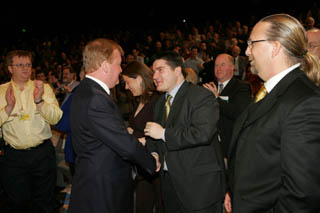 This EXCLUSIVE photo shows LibDem Donor Michael Brown with Charles Kennedy at the LibDems Party Conference. Brown is the one on the right with the ponytail. And they say money doesn't buy you access! Brown pleaded guilty to two charges of perjury this morning st Southwark Crown Court. I haven't yet found out what happened about the other 51 charges he was facing. He will be sentenced on 25 September, only three days after the end of the LibDem conference. He faced a jail sentence. The full story is on BBC Online HERE. Hopefully I will have more details later.
UPDATE: This is the FT report from the court.ib Dem donor faces possible jail sentence
Michael Brown, the Liberal Democrats' biggest political donor, was facing a possible jail sentence after pleading guilty on Thursday morning to perjury and passport-related charges at Southwark Crown Court. The Scottish financer, who was arrested in Spain three months ago, will be sentenced in late-September. But a judge indicated that the two counts on which Mr Brown pleaded guilty would normally result in imprisonment.
"On the face of it, a custodial sentence would be appropriate," Judge Geoffrey Rivlin commented. Mr Brown, who gave the Liberal Democrats £2.4m last year, had faced over 30 charges in a private criminal prosecution brought by HSBC bank. The international banking group had initially begun a civil action against the businessman and his company, 5th Avenue Partners, last year, alleging that fraud had occurred in respect of certain bank accounts held with HSBC. As part of those proceedings, the financier swore an affidavit, stating that some of money from those accounts had been used as collateral for trading with Refco, the brokerage company, and generated significant profits. But by December last year, the bank says that it had gathered evidence which it claims demonstrated that statements in the affidavit were false. In respect of the Refco trading, the bank says that it suspected that no such trading had ever taken place at all.
Accordingly, at the bank's request, the Crown Prosecution Service obtained a European Arrest Warrant for Mr Brown, and he was extradited from Spain earlier this year. On Thursday morning, the businessman, dressed in jeans, pleaded guilty to one charge of perjury in respect of that affidavit, admitting that he made a statement "that he knew to be false". The remaining 30 counts in the private criminal prosecution will lie on the court file. Separately, Mr Brown also pleaded guilty to one of two charges brought by the CPS in relations to passport offences. He admitted that he had "made an untrue statement" in order to get a new passport from the Passport Office, by claiming that the old one had been destroyed in a washing-machine.
Margaret Beckett: Still an Old Leftie at Heart
I've been thinking a bit about this rather ridiculous row between Margaret Beckett and the Americans about the planes laden with bombs landing at Prestwick en route for Israel. It seems she's not complaining about the fact that planes full of bombs are landing here, merely that they didn't fill in the right forms. Seeing as Britain has sold £25 million of arms to Israel in the last 12 months she hasn't really got a leg to stand on. The question is: did Downing Street approve her remarks? Because if not, Tony Blair will go into full apology mode when he meets Bush tomorrow in Washington. This is the first time Beckett has made an impact on the headlines since her surprise appointment as Foreign Secretary nearly three months ago. What people seem to have forgotten is that Margaret Beckett is an old leftie at heart and in her gut she's anti American. And it's a further sign of Blair losing his grip on power that Beckett feels able to speak out in this manner, because you can bet your bottom dollar that Jack Straw wouldn't have done so.
Wednesday, July 26, 2006
On the Media Tonight...
As Andrew Neill would say, you lucky people. I'll be on Sky News at 9.30 talking about Tony Blair's Health speech, and then doing the BBC News 24 paper preview at 10.50pm and 00.15am. Just so you know when to switch over...
This Blog Keeps Disappearing...
I'm told by some correspondents over the last few days that they can't access the site. They get the left hand column but that's it - or sometimes the content appears at the bottom of the left hand column. otherwise it's the left hand column and a big white space with no words. We had this once before and it was because I had used an over-large picture. That can't be the cause of it this time. I'm at a loss over it, to be honest - could it be something to do with the browser some people use? I think Guido is having similar issues. Any suggestions gratefully received.
UPDATE: 23.20 Thanks to all who have explained what is happening. I'm not sure I understand it all, but the message seems to be clear. Move from Blogger. I've emailed Rachel Whetstone at Google to ask her who deals with Blogger in the UK, because if Guido, I and others move platforms it's not exactly great publicity for them, is it? I have also now removed a lot of the extraneous material on the site - Flickr, Neocounter etc, so that may quicken things up a bit. You'll also only be able to see the last four days posts on screen, but the rest are accessible in the Archive, which you can find at the bottom of the right hand column. The computer I am using here at the BBC doesn't display the right hand column so I can't move it up now, in case it doesn't work, but I will do it tomorrow morning. Let's see if all that helps speed the screen download.
UPDATE: 23.20 Thanks to all who have explained what is happening. I'm not sure I understand it all, but the message seems to be clear. Move from Blogger. I've emailed Rachel Whetstone at Google to ask her who deals with Blogger in the UK, because if Guido, I and others move platforms it's not exactly great publicity for them, is it? I have also now removed a lot of the extraneous material on the site - Flickr, Neocounter etc, so that may quicken things up a bit. You'll also only be able to see the last four days posts on screen, but the rest are accessible in the Archive, which you can find at the bottom of the right hand column. The computer I am using here at the BBC doesn't display the right hand column so I can't move it up now, in case it doesn't work, but I will do it tomorrow morning. Let's see if all that helps speed the screen download.
Peter Hain Flies into Sleaze Row
The Belfast Telegraph reports today that Peter Hain has used taxpayers' money to fund flights to sporting jollies in the Republic of Ireland. I suppose we shouldn't be surprised. The Bishop of London will not be pleased about Mr Hain using flights, and taxpayers will even more vexed. Click HERE for the full story.
EXCLUSIVE: LibDem Donor in Court Tomorrow
 LibDem Donor Michael Brown is up before Southwark Crown Court tomorrow in the first stage of a criminal prosecution. Brown gave the LibDems £2.4 million before the last election and was arrested in Majorca in April on suspicion of forgery.
The hearing starts at 9.45am in Court number 1, should you wish to be there. He's charged with 53 (!) counts of forgery. The hearing is held for him to enter a plea and to fix the trial date and various disclosures to be arranged.
Police have reportedly sezied £10 million of his assets police seized £10m of his assets in Majorca including five properties, a £400k yacht, a Porsche and a Bentley. So far they have not knocked on the door of 4 Cowley Street (just my little joke).
Personally, I'd like to know what he disclosed to the LibDems about his UK business operations and what checks they made on his status.
Perhaps a lawyer who is reading this could clear something up for me. Under what circumstances would the LibDems be forced to repay the donation? Most of us might think there was a moral obligation on them to do so if indeed it is proved that his UK companies were not trading at the time of the loan (see HERE). But what is the legal precedent for somone having to hand back a donation to a third party which at the time was in no position to give it. My suspicion is that HSBC are the key here. They are the ones bringing the charges against Brown and they are the ones who may well try to demand the money back from the LibDems.
The trial date is expected to be set for the autumn.
Health - It's All YOUR Fault Says Blair
I have just watched Blair's Health Speech in Nottingham on Sky. He had the usual heckler interruption which was quite entertaining, but as for the speech, well, I couldn't quite see the point he was trying to make beyond blaming the ills of the National Health Service on all these irresponsible people who dare to fall ill. If it wasn't for them, the whole thing would be running very smoothly indeed, was his implication.
It is self evident that people should try to improve their health, but for their own sake, not for the benefit of a buregoning bureaucracy which is becoming unreformable. Governments operate for the benefit of the people, not the other way around.
Anyway, according to Patricia Hewitt, this is the NHS's best ever year. So what's Blair worried about? In his own little world the NHS is almost perfect, Iraq is a democracy, John Prescott is respected and the snow in the artic is black.
BBC Online reports: People must take more responsibility for their health to relieve pressure on the NHS, Tony Blair is expected to say. In a major speech, the prime minister will warn the service could be crippled by the cost of treating those affected by obesity, alcohol abuse and smoking. But he says government does have a role in encouraging healthier lifestyles.
The PM says he will consider banning advertising of junk food to children to boost public health, but will give the industry a chance to self-regulate. Speaking on the eve of the Nottingham speech, Mr Blair said he has become less worried that bringing in such measures would be portrayed as "nanny state" politics. More HERE.
Of course they are Nanny State measures. And I think we've had quite enough of those courtesy of Nanny Hewitt and her ilk. What the Government can legitimately do is inform and educate, but in the end you either believe people should make their own decisions or you believe those decisions should be taken by the State. Some of what Blair was saying was very sensible, and I'm not pretending otherwise, but I think he's starting from the wrong premise.
It is self evident that people should try to improve their health, but for their own sake, not for the benefit of a buregoning bureaucracy which is becoming unreformable. Governments operate for the benefit of the people, not the other way around.
Anyway, according to Patricia Hewitt, this is the NHS's best ever year. So what's Blair worried about? In his own little world the NHS is almost perfect, Iraq is a democracy, John Prescott is respected and the snow in the artic is black.
BBC Online reports: People must take more responsibility for their health to relieve pressure on the NHS, Tony Blair is expected to say. In a major speech, the prime minister will warn the service could be crippled by the cost of treating those affected by obesity, alcohol abuse and smoking. But he says government does have a role in encouraging healthier lifestyles.
The PM says he will consider banning advertising of junk food to children to boost public health, but will give the industry a chance to self-regulate. Speaking on the eve of the Nottingham speech, Mr Blair said he has become less worried that bringing in such measures would be portrayed as "nanny state" politics. More HERE.
Of course they are Nanny State measures. And I think we've had quite enough of those courtesy of Nanny Hewitt and her ilk. What the Government can legitimately do is inform and educate, but in the end you either believe people should make their own decisions or you believe those decisions should be taken by the State. Some of what Blair was saying was very sensible, and I'm not pretending otherwise, but I think he's starting from the wrong premise.
LibDems Only Party With 'Socialist Policies' Says Defector
This from Scarborough Today...
A key member of both Scarborough Council and North Yorkshire County Council has defected to the Liberal Democrats because he does not believe "there is any socialism in the Labour Party today". Cllr Brian Simpson said: "We now have a situation where a Labour Government is, I believe, promoting recycled Thatcherite policies and is nothing more than a caretaker Tory government."The so-called 'New Labour' project has failed. All it has done is push the party further and further to the right."I, in all conscience, can no longer be part of it."In May this year Cllr Simpson stood unsuccessfully against Cllr Eric Broadbent for the leadership of the Labour group on Scarborough Council.Cllr Simpson, 36, said: "It was a last-ditch attempt to try to influence the way the Labour Party is heading as a whole."At Eastfield there are lot of Labour members and ordinary voters who agree with me."The Labour Party has lost its way. The only party which has any socialist policies is the Liberal Democrats."
To read the full story click HERE.
A key member of both Scarborough Council and North Yorkshire County Council has defected to the Liberal Democrats because he does not believe "there is any socialism in the Labour Party today". Cllr Brian Simpson said: "We now have a situation where a Labour Government is, I believe, promoting recycled Thatcherite policies and is nothing more than a caretaker Tory government."The so-called 'New Labour' project has failed. All it has done is push the party further and further to the right."I, in all conscience, can no longer be part of it."In May this year Cllr Simpson stood unsuccessfully against Cllr Eric Broadbent for the leadership of the Labour group on Scarborough Council.Cllr Simpson, 36, said: "It was a last-ditch attempt to try to influence the way the Labour Party is heading as a whole."At Eastfield there are lot of Labour members and ordinary voters who agree with me."The Labour Party has lost its way. The only party which has any socialist policies is the Liberal Democrats."
To read the full story click HERE.
Channel 4 News Morning Report - Israel & Blogging
Click HERE to listen to my latest Channel 4 News Morning Reports Podcast. This week it's on Israel and the bloggers' reaction to it. I quote Antonia Bance, Harry's Place, ConservativeHome, Cicero's Songs, Liberal Alone. And Blog of the week is Clive Davis. You can listen to the Channel 4 News Morning Report every morning on Oneword Radio or by clicking HERE.
Tuesday, July 25, 2006
Mark Oaten - The Story I Missed
 Last Tuesday I was told by a friend of Mark Oaten that he would announce this week he'd be standing down at the next election. And what did I do about it? Nothing. Diddly squat. Why? Because (cue embarrassed blush) I forgot about it. That sort of thing starts happening when you get to 44 I've been told! You can imagine my reaction tonight when I heard the news on 5 Live while driving home from Tunbridge Wells Sainsbury's.
So what does it all mean? Well for Mark Oaten it will close the chapter on a political career that appeared to promise much, but in the end delivered little. There's only one thing he'll be remembered for in the footnotes of early twenty first century political history, but let's not go into that here. I suspect that Oaten will try to reinvent himself as a sort of LibDem Michael Portillo and tart himself round the TV studios. He may well succeed in ther short term, but he hasn't got Portillo's charisma or intellect to make a long term career out of it. But whatever he does, let's wish the guy well.
I do wonder if the redrawing of the boundaries of his constituency played a part in his decision. Meon Valley always looked like a Tory gain. Now I'd say it was almost a dead certainty. We need to get a candidate selected their pretty damn quick, because you can bet your house on the LibDems having a Julia Goldsworthy look-a-like selected by the end of September. Are you ready George Hollingbery? Your Party needs you.
PS I seem to have been much kinder than certain LibDem Blogs to Mr Oaten. True colours will always out.
Straight from the Hezbollah's Mouth
Stephen Pollard is Israel's main cheerleader in the British blogosphere. The whole thing is black and white to him. I guess it's easier that way. I wish I saw things that clearly. His posts today were particularly interesting, especially the one highlighting some comments by the Hezbollah leader Hassan Nasrallah...
I told them [the Lebanese government] on more than one occasion that we are taking the issue of the prisoners seriously, and that abducting Israeli soldiers is the only way to resolve it. Of course, I said this in a low-key tone. I did not declare in the dialogue: 'In July I will abduct Israeli soldiers.' This is impossible."
Interviewer: "Did you inform them that you were about to abduct Israeli soldiers?"
Hassan Nasrallah: "I told them that we must resolve the issue of the prisoners, and that the only way to resolve it is by abducting Israeli soldiers."
Interviewer: "Did you say this clearly?"
Hassan Nasrallah: "Yes, and nobody said to me: 'No, you are not allowed to abduct Israeli soldiers.' Even if they had told me not to... I'm not defending myself here. I said that we would abduct Israeli soldiers, in meetings with some of the main political leaders in the country. I don't want to mention names now, but when the time comes to settle accounts, I will.
So the culpabality and compliance of the Lebanese government in Hezbollah's actions seems clear. They are clearly completely impotent when dealing with Hezbollah. This may not be their fault but having worked all this out for themselves, is it any surprise that Israel should take action against Hezbollah? Israel's mission is clear: to wipe out Hezbollah and then get the hell out. Bearing in mind the history of their 18 year occupation of southern Lebanon, which ended in 2000, the precedents are not good. Israel got out in 2000 partly because the Israeli people were fed up with the seemingly never-ending loss of Israeli lives in the area. Will history repeat itself? Let's hope not.
I told them [the Lebanese government] on more than one occasion that we are taking the issue of the prisoners seriously, and that abducting Israeli soldiers is the only way to resolve it. Of course, I said this in a low-key tone. I did not declare in the dialogue: 'In July I will abduct Israeli soldiers.' This is impossible."
Interviewer: "Did you inform them that you were about to abduct Israeli soldiers?"
Hassan Nasrallah: "I told them that we must resolve the issue of the prisoners, and that the only way to resolve it is by abducting Israeli soldiers."
Interviewer: "Did you say this clearly?"
Hassan Nasrallah: "Yes, and nobody said to me: 'No, you are not allowed to abduct Israeli soldiers.' Even if they had told me not to... I'm not defending myself here. I said that we would abduct Israeli soldiers, in meetings with some of the main political leaders in the country. I don't want to mention names now, but when the time comes to settle accounts, I will.
So the culpabality and compliance of the Lebanese government in Hezbollah's actions seems clear. They are clearly completely impotent when dealing with Hezbollah. This may not be their fault but having worked all this out for themselves, is it any surprise that Israel should take action against Hezbollah? Israel's mission is clear: to wipe out Hezbollah and then get the hell out. Bearing in mind the history of their 18 year occupation of southern Lebanon, which ended in 2000, the precedents are not good. Israel got out in 2000 partly because the Israeli people were fed up with the seemingly never-ending loss of Israeli lives in the area. Will history repeat itself? Let's hope not.
The Most Revolting Football Strip Ever
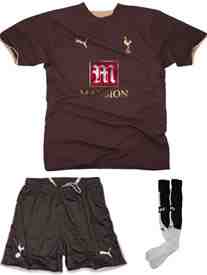 This is Tottenham Hostpur's new away strip. Bring's a whole new relevance to the chant:
YOU'RE SH*T, AND YOU KNOW YOU ARE
Have you joined my Fantasy League yet? Click HERE.
Prescott Gaffe Results in Downing Street Fury
 Toys were being thrown out of Downing Street prams yesterday after John Prescott appeared to signal that a change of leadership might be rather closer than we all thought during his interview with Andrew Marr on Sunday. Indeed, yesterday's Telegraph speculates that it means the formal leadership election process will be triggered at this year's Party conference in September. If so, the drinks are on me as I have a nice little bet that Blair will resign before October.
Of course, Prescott has form in blurting out little nuggets about the relationship between Brown and Blair. It was he who leaked the fact that the three of them had had dinner about 18 months ago, where he had knocked their heads together. He usually does it when he needs to 'big up' his own importance. At the time, Blair considered sacking him, but bottled it. He probably regrets it now.
The Times claimed yesterday that the Police will delay interviewing the Prime Minister as they have been slightly thrown off course by Lord Levy's brazen refusal to answer their questions. Of course the simple way out would be to charge him and let a jury decide. But this delay could be a welcome delay for the Labour Party as Blair might have gone by the time the Police are ready to question him. It would be a lot less politically damaging for an ex PM to be interviewed under caution, rather than a serving one. It would also allow Gordon Brown to cut Blair adrift and I can think of few things he would rather do-apart from Raith Rovers winning the Champion's League, possibly.
The lack of press comment about Lord Levy's refusal to answer any police questions after reading out a pre-prepared statement is rather surprising. After all, didn't Lord Levy look into the TV cameras and tell us that he was doing everything possible to help the Police with their enquiries. Another little lie from Lord Sleazy. Didn't his mother ever tell him that little boys who lie always get found out in the end?
UPDATE: An interesting comment from an ex Police Officer in the Comments section: I was a police officer for 31 years and can say without fear of contradiction that only the guilty read out prepared statements and then say no comment to all police questions. You cannot stop the innocent talking!
Wages of Spin Must be Slashed
In 1997 John Major's government employed 38 Special Advisors at a cost of £1.8 million (average salary £38,000). In 2006 Tony Blair's administration employs 84 SPADs at a cost of £5.8 million - an average salary of £69,000. Who said inflation had disappeared under Labour? I trust it will remain a Conservative commitment to slash their numbers to 1997 levels.
Bow Group Tax Proposals are Mad
I've seen some wacko tax proposals in my time but the Land Value Tax as proposed by the Bow Group yesterday has to rank as one of the most muddled and ill thought out. It's not even what it says on the tin. It's not a LVT, it's a HVT, a House Value Tax. It seeks to replace Council Tax, Inheritance Tax, Stamp Duty and several more besides by a 1 per cent tax on the value of a house. Barking mad. Like the LibDems' Local Income Tax, it's middle class families who would be stung by this proposal, especially those in London and the South East. If these proposals we're even given the remotest consideration by the Party I have a simple message to Conservative candidates standing in marginal seats. Don't bother. Thankfully George Osborne is far too sensible.
Monday, July 24, 2006
Husky Loving MPs Get Ready to Polish Brass Monkeys
An intrepid cross-party group of Members of Parliament is about to embark on a challenge of a lifetime by husky dog sled. Far from the comfort of the Palace of Westminster, the MPs will travel 400 kilometres across the Arctic Circle to raise cash for charity.
Taking place next February, the Westminster Arctic Challenge is the first expedition of a new cross-party organisation called The Westminster Challenge, which launches today. Established by a group of young professionals from across the political divide, The Westminster Challenge aims to engage politicians directly in the work of charities in the UK and plans to run two MP challenges during each Parliament.
Nick Clegg (LD), Tobias Ellwood (Con), Emily Thornberry (Lab), Ed Vaizey (Con), and Jenny Willott (LD) will be donning their snow-suits and trekking through Finland, Sweden and Norway to the Tri-nations Border to raise much-needed funds for Crimestoppers, Cancer Research UK and The Children’s Society. Each MP will also nominate a constituency-based charity to benefit.
This trek is no easy feat for those taking up the challenge. Not only will they endure temperatures reaching as low as minus 40 degrees, they will be expected to feed, clean and care for their team of husky dogs, build igloos and ice huts in which to sleep and catch their own fish to survive.
Nick Clegg, MP for Sheffield, Hallam, representing the MP team, said: “This is such a fantastic opportunity and we are very excited about the trek. We know it is going to be gruelling and that our fitness and stamina will be put to the test, but it’s worth every aching muscle and chilblain because the money raised will go to help a number of good causes. We will be spending time with the benefiting charities before the expedition to gain a better understanding of their work in the community.
“We believe it is crucial that Parliamentarians get behind charities and support the work they do and we will be encouraging our fellow MPs to do so.”
Richard Stephenson, Founder of The Westminster Challenge, said, “We are delighted to have received a great deal of support from senior members of both the Houses of Parliament and the corporate world to date. The idea behind The Westminster Challenge is to bring politics and charities together. Engaging MPs in charitable work, and encouraging them to get out there and raise funds, is something that will benefit and complement the fantastic work charities already do. We are very excited to be launching our first expedition, which will do just that. ”
Taking place next February, the Westminster Arctic Challenge is the first expedition of a new cross-party organisation called The Westminster Challenge, which launches today. Established by a group of young professionals from across the political divide, The Westminster Challenge aims to engage politicians directly in the work of charities in the UK and plans to run two MP challenges during each Parliament.
Nick Clegg (LD), Tobias Ellwood (Con), Emily Thornberry (Lab), Ed Vaizey (Con), and Jenny Willott (LD) will be donning their snow-suits and trekking through Finland, Sweden and Norway to the Tri-nations Border to raise much-needed funds for Crimestoppers, Cancer Research UK and The Children’s Society. Each MP will also nominate a constituency-based charity to benefit.
This trek is no easy feat for those taking up the challenge. Not only will they endure temperatures reaching as low as minus 40 degrees, they will be expected to feed, clean and care for their team of husky dogs, build igloos and ice huts in which to sleep and catch their own fish to survive.
Nick Clegg, MP for Sheffield, Hallam, representing the MP team, said: “This is such a fantastic opportunity and we are very excited about the trek. We know it is going to be gruelling and that our fitness and stamina will be put to the test, but it’s worth every aching muscle and chilblain because the money raised will go to help a number of good causes. We will be spending time with the benefiting charities before the expedition to gain a better understanding of their work in the community.
“We believe it is crucial that Parliamentarians get behind charities and support the work they do and we will be encouraging our fellow MPs to do so.”
Richard Stephenson, Founder of The Westminster Challenge, said, “We are delighted to have received a great deal of support from senior members of both the Houses of Parliament and the corporate world to date. The idea behind The Westminster Challenge is to bring politics and charities together. Engaging MPs in charitable work, and encouraging them to get out there and raise funds, is something that will benefit and complement the fantastic work charities already do. We are very excited to be launching our first expedition, which will do just that. ”
Cherie Blair in New Honours Scandal
I really must be living in a parallel universe. Read THIS. I particularly enjoyed the bit about the "Rules of Conduct of Life". Is someone having a dig at the Bliars or does this come under the usual arslikhan?
Anyone Want to Beat Ken Livingstone?
There's a rather good blog called MayorWatch which has a good analysis of the problems facing the Conservatives in finding a candidate for the next London mayoral elections. You can read it HERE.
Mitchell Calls for Free Trade in Africa
 Shadow International Development Secretary Andrew Mitchell is making a major speech tonight to the Globalisation Institute, in which he lays out a vision for a pan-African trading bloc, with free trade between all African nations. You can read the speech HERE.
Mitchell reckons such a move could help to lift millions of people out of poverty. He pointed to figures showing that while OECD countries cut tariffs from an average of 23.7 per cent to just 3.9 per cent in the 20 years from 1983, sub-Saharan Africa only cut tariffs from 22.1 per cent to 17.7 per cent. African countries could get a massive economic boost by liberalising their trading arrangements, with gains up to three times as large as any that could result from the Doha round of world trade talks. Andrew Mitchell says:
"Astonishingly, many African countries impose tariffs on the import of medicines, and even Tanzanian-made anti-malaria bed nets.. These are, effectively, killer tariffs. For most Africans, it is harder to trade with those across African borders than with distant Europeans and Americans. In 1997, the World Bank found that countries in sub-Saharan Africa imposed an average tariff of 34 per cent on agricultural products from other African nations, and 21 per cent on other products. The results are clear. Only 10 per cent of African trade is with other African nations. Meanwhile, 40 per cent of North American trade is with other North American countries and 63 per cent of trade by countries in Western Europe is with other Western European nations. While North America and Europe have been getting richer through trade, Africa has been left standing at the touchline. The world has lifted more people out of poverty in the past 50 years that at any point in human history - but Africa is the continent that is being left behind. The lack of intra-African trade is missed opportunity. Africa's barriers are seriously undermining the continent's prospects for development. They are preventing specialisation between African nations, hindering productivity growth, and clogging up Africa's wealth creation engine."
I admit that this subject is not one I'm an expert on, but from what I pick up on the political grapevine, Andrew Mitchell has made quite an impact in this portfolio. It always used to be a cinderella portfolio but in recent years has crept up the political agenda for all parties.
PS Apologies for the lack of posts today. I did send a good one (or so I thought) from my Blackberry this morning on Prescott and Levy, but somehow it got lost in cyberspace.
Sunday, July 23, 2006
Flyin' is Virgin' On a Sin (And So's Driving an Audi)
 Sometimes I really do despair of the Church of England. Its rituals now include sacrificing creed to convenience and conviction to political correctness. I could scarcely believe what I was reading on the front page of the Sunday Times today. IT'S A SIN TO FLY SAYS CHURCH. Now I think I've got a good grip on the definition of sinning (no comments please!), but I can't see where in the bible it mentions air travel, or driving an Audi (as I do), being in need of repentance. The Bishop of London, the Right Reverend Richard Chartres disagrees...
“Making selfish choices such as flying on holiday or buying a large car are a symptom of sin. Sin is not just a restricted list of moral mistakes. It is living a life turned in on itself where people ignore the consequences of their actions.”
Claire Foster, the church’s environment policy director, said: “Indiscriminate use of the earth’s resources must be seen as profoundly wrong, just as we now see slavery as wrong.”
So all those Anglican bishops attending the next big Anglican jamboree had better find alternative means of getting there. All this does is remind me why I rarely go to church anymore. And if I did, it would be to a Catholic one. At least I'd only be lectured on proper sins.
UPDATE: A correspondent reminds me that Richard Chartres spent two months this year on a luxury cruise, lecturing on theology. He was heavily criticised for being on a cruise ship over Easter rather than attending services at St Paul's Cathedral. I am absolutely positive cruise ships give off no carbon emissions at all. Of course not.
George Galloway Supports Hezbollah Terrorists (Why Should Anyone Be Surprised?)
 If ever I had any doubts about Israel's actions in Southern Lebanon, they've well and truly been extinguished by George Galloway. This is what he told the anti Israel rally in London yesterday...
"I am here to glorify the Lebanese resistance, Hezbollah. I am here to glorify the leader, Sheikh Hassan Nasrallah."
And if you think I am making this up, click HERE for proof. Harry's Place sums it all up rather well. He says, "this wasn't an antiwar rally; it was a pro-fascist rally."
Meanwhile, Stephen Pollard rightly attacks the BBC for this morning's Sunday AM programme for its appalling anti-Israel bias HERE. He might also have attacked Andrew Marr for a truly terribe interview with John Prescott. I like Andrew Marr, but he didn't land a glove on Prescott.
Janet Street-Porter Trips Over Her Teeth into Peter Preston's Niche
Peter Preston, ex editor of the Guardian, earns a crust nowadays writing media columns. He writes in the Observer today under the headline WE'RE ALL MEMBERS OF A NOUVEAU NICHE. I had to read his article three times before I understood it, and even after the third attempt I wasn't quite sure. I think he's saying in a rather 'old gittish' way, that there are no stars any longer. His point is that there is no longer a single mass media, in which everyone watches, reads and listens to the same thing. A diverse, digital age has led to a large selections of small niches and he takes as proof a new book by Chris Anderson called The Long Tail: Why the Future of Business is Selling Less of More. Here's part of his article...
Our national hearts don't beat as one any longer. 'We're leaving the water-cooler era, when most of us listened, watched and read from the same relatively small pool of hit content.' See? There's a lot of it around, but it comes in smaller, targeted packages. Most of Anderson's fans and critics have stumbled over the problem of movie blockbusters, where More is More bums on seats and box-office cash - but narrow the focus (as Fortune magazine did the other day) to everyday rolling media and ask three simple questions. Name the biggest star on primetime TV. Name a star created by the internet. Name a great advertising slogan written in this decade. Then pause to suck your thumb...
Richard and Judy, Jeremy Kyle, Noel Edmonds, Anne Robinson, Jeremy Paxman? They're all regulars with hefty salaries attached, but none is a true primetime operator. They're out of hours. So is Jonathan Ross, carrying £18m of your licence-fee money in his floppy jacket pockets? He's late on the scene deliberately, so he can send the Mail on Sunday gibbering to bed. Graham Norton? Ah! Whatever became of Graham Norton? Watch Little Britain fade away now. And Jim Davidson, playing the ultimate generation game, has declared himself bankrupt. No: that cupboard is pretty bare, once you've shut Jamie's kitchen door - but not as bare as the net when it comes to star quality. Is Iain Dale the new Matt Drudge? There may be bloggers who build a faithful following: but, apart from La Huffington, they don't have their name in lights. Nor does the net itself - raucous, competitive, oozing instant derision - chart the path to galactic glory. And as for fantastic advertising - once you're past AOL's plonking 'Discuss' - all I can think of is those damned Sheila's Wheels. Not much of a result. And see how, increasingly, we do inhabit dozens of niches and live in little intellectual ditches.
The thing is, he's right. The Internet has created very few stars, but isn't that the whole point? It has opened up the field of mass communication to everyone. It's not just restricted to the Peter Prestons of this world. Of course some bloggers are better known than others, but as Peter Wilby said in the New Statesman last week, that may be more down to marketing skills and self publicity than great writing ability. But most bloggers make no pretence of having great writing ability - me included. I've always been far happier talking than writing. But at least Peter Preston doesn't fall into the trap Janet Street-Porter has tripped into today teeth first.
She devotes her column in the Independent on Sunday to sneering down her ample nose at the whole concept of blogging. She reckons "blogs are for anoraks who couldn't get published any other way." She desribes the blogosphere as "the verbal diarrhoea of the under-educated and the banal." Hmmm. Well I suppose I must plead guilty to having had a comprehensive school education and got a 2-1 degree from the University ofEasy AccessEast Anglia.
What is it with the Street-Porters of this world that they feel they are so intellectually superior to the rest of the population? In twenty years I have never heard her express a view whcih has changed my mind on anything. In fact I can't recall ever reading anything she's written which has stimulated me to think further on the subject or find out more. But I can think of several blogs which have done that.
The only think Street-Porter has achieved by her attack on blogs and new media in general is to ingratiate herself with her editor Simon Kelner, who is also doubtful about the relevance of the internet to the future of newspapers. He made a SPEECH this week to a Press Gazette dinner in which he criticised the Guardian for putting stories on its website first, rather than in the printed newspaper. Kelner admits that he may be viewed as a Luddite, but he reckons it would be madness for the Independent to go down that road. He may be right, but his rivals on The Times and Telegraph are pouring money into their online operations in a belated attempt to vcatch up with The Guardian. From what I have seen so far, not a lot has changed.
Returning to Peter Preston's original point, The Guardian has created a whole series of online niches for itself, which may be copied by its rivals, but I suspect they will never be emulated. The Guardian's online presence is now a key part of its marketability and appeal to advertisers. It doesn't need to create stars, it spotted a gap in the market and has filled it. Stars are so twentieth century. We're in the century of the niche.
Our national hearts don't beat as one any longer. 'We're leaving the water-cooler era, when most of us listened, watched and read from the same relatively small pool of hit content.' See? There's a lot of it around, but it comes in smaller, targeted packages. Most of Anderson's fans and critics have stumbled over the problem of movie blockbusters, where More is More bums on seats and box-office cash - but narrow the focus (as Fortune magazine did the other day) to everyday rolling media and ask three simple questions. Name the biggest star on primetime TV. Name a star created by the internet. Name a great advertising slogan written in this decade. Then pause to suck your thumb...
Richard and Judy, Jeremy Kyle, Noel Edmonds, Anne Robinson, Jeremy Paxman? They're all regulars with hefty salaries attached, but none is a true primetime operator. They're out of hours. So is Jonathan Ross, carrying £18m of your licence-fee money in his floppy jacket pockets? He's late on the scene deliberately, so he can send the Mail on Sunday gibbering to bed. Graham Norton? Ah! Whatever became of Graham Norton? Watch Little Britain fade away now. And Jim Davidson, playing the ultimate generation game, has declared himself bankrupt. No: that cupboard is pretty bare, once you've shut Jamie's kitchen door - but not as bare as the net when it comes to star quality. Is Iain Dale the new Matt Drudge? There may be bloggers who build a faithful following: but, apart from La Huffington, they don't have their name in lights. Nor does the net itself - raucous, competitive, oozing instant derision - chart the path to galactic glory. And as for fantastic advertising - once you're past AOL's plonking 'Discuss' - all I can think of is those damned Sheila's Wheels. Not much of a result. And see how, increasingly, we do inhabit dozens of niches and live in little intellectual ditches.
The thing is, he's right. The Internet has created very few stars, but isn't that the whole point? It has opened up the field of mass communication to everyone. It's not just restricted to the Peter Prestons of this world. Of course some bloggers are better known than others, but as Peter Wilby said in the New Statesman last week, that may be more down to marketing skills and self publicity than great writing ability. But most bloggers make no pretence of having great writing ability - me included. I've always been far happier talking than writing. But at least Peter Preston doesn't fall into the trap Janet Street-Porter has tripped into today teeth first.
She devotes her column in the Independent on Sunday to sneering down her ample nose at the whole concept of blogging. She reckons "blogs are for anoraks who couldn't get published any other way." She desribes the blogosphere as "the verbal diarrhoea of the under-educated and the banal." Hmmm. Well I suppose I must plead guilty to having had a comprehensive school education and got a 2-1 degree from the University of
What is it with the Street-Porters of this world that they feel they are so intellectually superior to the rest of the population? In twenty years I have never heard her express a view whcih has changed my mind on anything. In fact I can't recall ever reading anything she's written which has stimulated me to think further on the subject or find out more. But I can think of several blogs which have done that.
The only think Street-Porter has achieved by her attack on blogs and new media in general is to ingratiate herself with her editor Simon Kelner, who is also doubtful about the relevance of the internet to the future of newspapers. He made a SPEECH this week to a Press Gazette dinner in which he criticised the Guardian for putting stories on its website first, rather than in the printed newspaper. Kelner admits that he may be viewed as a Luddite, but he reckons it would be madness for the Independent to go down that road. He may be right, but his rivals on The Times and Telegraph are pouring money into their online operations in a belated attempt to vcatch up with The Guardian. From what I have seen so far, not a lot has changed.
Returning to Peter Preston's original point, The Guardian has created a whole series of online niches for itself, which may be copied by its rivals, but I suspect they will never be emulated. The Guardian's online presence is now a key part of its marketability and appeal to advertisers. It doesn't need to create stars, it spotted a gap in the market and has filled it. Stars are so twentieth century. We're in the century of the niche.
UPDATE: Andrew Kennedy emails me with this delightful take about Janet Stree Paw er. A few hours ago I stumbled across yet another reality TV show. It was 3 "celebrities" learning to drive a London Black Cab. One of which was our friend Janet S-P.At one point, J S-P turned to the host and said,"Ere - I ope me Cab don't ave one of them Sat Nav devices in it - the voice on them fings really gets on me tits."
A charming vision, I'm sure you'll agree.
The Crime & (Possible) Punishment of Levy & Blair
Shaun Rolph has been looking at the Political Parties, Elections & Referendums Act of 2000 and has identified the sections which could spell real trouble for both Lord Levy and the Prime Minister. And it can all be traced back to Jack Dromey's outburst in March about not being told about loans taken out by the Labour Party. Shaun Rolph says...
The Prime Minister could face a year in prison and a £5,000 fine under legislation brought in by his own government to clean up party funding. He could be forced to step down as both Prime Minister and as an MP if found guilty of ‘illegal practices’ under the Political Parties, Elections and Referendum Act. He would be barred from standing for any elective office, and even from voting in elections, for three years.
What Crime Has Been Committed?
Jack Dromey is the Treasurer of the Labour Party. On 15 March 2006 he stated that he was unaware of loans totalling £3.5 million from Dr.Chai Patel, Barry Townsley and Sir David Garrard, all of whom had been nominated for peerages.
He said that this was in contrast to his being regularly consulted about bank loans. He told the BBC, “It cannot be right that the elected officers were kept in the dark”. If Dromey’s statement is correct, then one or more offences has been committed under the Political Parties, Elections and Referendums Act 2000. This is the legislation that established the Electoral Commission and the need to report to them all donations greater than £5,000.
 So, anyone who, with intent to deceive, concealed from Jack Dromey (i) the amount of any donation made to the party, or (ii) the person or body making such a donation, has committed a criminal offence.
Were The Loans Donations ?
The prosecution would have to prove that the loans were, in fact, donations. The legislation makes it clear that a donation is any money lent to the party otherwise than on commercial terms. Note that it specifies terms,not solely rates, so redemption dates and the likelihood of conversion to gifts, given past practice, will be considered when deciding if the loans were commercial.
Who Hid The Loans From Jack Dromey ?
Sunday Herald, March 19 2006 ‘Levy, with Blair’s backing, contacted Labour’s then general secretary Matt Carter to resurrect the process of securing commercial loans from wealthy Labour backers.’
The Times, July 16 2006 'The £14 million in secret loans was known only to Mr Blair, Lord Levy and Matt Carter, the general secretary of the Labour Party at the time’
Scotland on Sunday, 16 July 2006 ‘It was a full year before the 2005 general election that Blair, his chief-of-staff Jonathan Powell, Levy and Carter met in the Prime Minister’s ample Downing Street study to discuss how to return a Labour government with dwindling revenue. The four men swiftly decided to ditch the principled avoidance of the loans loophole.’
What Punishment Could They Face?What Next ?
Deputy Assistant Commissioner John Yates is leading a team from the Specialist Crimes Directorate looking into the possible sale of honours and the concealing of donations. He has told MPs that two files have already been passed to the Crown Prosecution Service. A decision whether to prosecute is expected in October or November of this year.What began with Jack Dromey’s statement in March may end with him in the witness box giving evidence against Tony Blair and other senior Labour figures.
So the Prime Minister and Lord Levy could ironically be caught by the very legislation their own government introduced. What poetic justice.
Note: Shaun Rolph is the author of this analysis, which he posted on his blog on Friday. He emailed me yesterday to ask what I thought of it. I thought it provided a new perspective and some new information so we agreed I would post it on here to give it a wider audience. Do visit Shaun's Blog and give him your feedback too.
Saturday, July 22, 2006
Steve Norris: I May Fall on my Sword for Dave
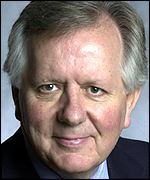 GMTV has an interview with Steve Norris tomorrow morning in which he hints that he might well not run for London mayor again.
Gloria De Piero:So Steve put us out of our misery, will it be third time lucky for you? Steve Norris: No I’m not going to say anything just at the moment, there’s a bit of time to go. I’m really interested to see who else might get flushed out because it’s quite an interesting process but so far we haven’t seen a lot of names emerge and I think it’s going to be interesting to see who is in the line up.
Gloria De Piero: Tell us what kind of factors might influence your decision?
Steve Norris: I have never made any secret of the fact that I think it’s the best job you could possibly have in government if you ever believe that you had any kind of mission there and that’s why I’ve did twice before. Now I always think about third time lucky and I think about somebody like me who has just about everything that David Cameron says he doesn’t want in his candidate. White male, middle class, middle aged, well middle age, I call it that, other people call it ……
Gloria De Piero: And you are a great Cameron supporter so would you rule yourself out on the basis that it was good for David Cameron?
Steve Norris: Would I fall on my sword for young Dave? Yeah, actually, I probably would, to be honest, because I do want the party to succeed and I am a huge supporter of David Cameron and I think he has done really well so far - a long way to go, everybody knows that. But I like the way he is taking the party and I happen to think the drive to present a different kind of image of the party is absolutely what we need to do and to people who say that this is about positioning, not about policy. I say you have got to be in the position first and that’s exactly what he is assuming.
Gloria De Piero: So what do you do, what kind of soul searching is required when you are a great supporter of David Cameron but you recognise that you are a white middle class man?
Steve Norris: Well you know from my point of view it’s a whole variety of things. It’s about where you are in your life – I mean I get 4 years older every time although Ken Livingstone and I are exactly the same age so I keep reminding myself that if he’s old enough for it, I presumably am. It’s about who else is out there, it’s about you know as I say the other ambitions that I’ve got so without being coy about it, I’m going to take a bit more time as I see what develops but I am sure that we will find somebody good to take on Ken Livingstone but actually just making, about the only political observation I’d make. I think Livingstone will lose this time – I think the magic went, I think we all understood why he won the first time. Personally I understood why he won the second time but by a much reduced margin my vote went up an awful lot and his actually didn’t go up at all. I think you know next time he is going to be quite vulnerable and particularly because Olympic costs over-run – we are all going to be paying huge bills in London. People are going to realise there’s another side to Ken.
Steve Norris also tells David Cameron he should reshuffle his Shadow team soon. "I think David made some very interesting and innovative choices in his team when he started but he also recognised coming in as he did very much a new boy, that he was going to keep the continuity that comes from taking experience and advice from some of the greyer heads and the older people around. And I think that was quite right but there will be a time I am sure to refresh, to allow some of us older people to retire from the scene and leave the party in younger hands but I think he has played that quite well."
I will return to this subject during the week, as I rather agree with Norris on the reshuffle issue.
Labour Minister Trousers £24 Million
The Mail on Sunday has finally printed its story on Shaun Woodward. Apparently he has sold his Oxfordshire mansion for a whopping £24 million. The Mail on Sunday says there are rumours of a marruage breakdown but they pretty categorically denied by his wife. Read the full story HERE.
Nat West 3: Out of Sight, Out of Mind?
So the NatWest 3 have been denied full bail and are not allowed to return to the UK. As a consequence they face bankruptcy. Do I not recall that Tony Blair said he had had a word with the Americans to ensure that they would get lenient bail conditions? No, my memory must be failing me. Tony's influence on the American administration is legendary, isn't it? Yo...
Israel Faces Defeat Tomorrow...
...by Britain in the Tennis Davis Cup, that is... Well actually, Britain is 2-1 down and must win the two remaining singles matches to win. But we're all optimistic that Andy Murray's serves will be disproportionate and Alex Bogdanovic will make some unreturnable surgical strikes in his opponent's court, aren't we?. My only worry is that Andy Murray's back injury reoccurs and he calls a ceasefire. Let the green-ink posts begin...
Proof that Prescott HAS Broken the Ministerial Code
This story will be in the Independent on Sunday tomorrow. It brings yet more pressure on Tony Blair to ask Sir John Bourn to launch an investigation into whether Prescott has broken the Ministerial Code. His investigation shouldn't take him too long, if what Francis Elliott and Marie Woolf say sticks...
John Prescott broke the rules on ministerial conduct at least three times when he accepted gifts and hospitality from a US billionaire, the Independent on Sunday can reveal. The Deputy Prime Minister, already reeling after a damning report by the Parliamentary watchdog, is dealt a fresh blow today as he admits he failed to declare to Customs the gift of a cowboy outfit from Philip Anschutz.
The confession piles the pressure on Tony Blair who is refusing to investigate Mr Prescott’s conduct in secretly staying on the ranch of the Millennium Dome’s owner and receiving presents from him. The obligation to declare to Customs overseas gifts “on importation” is clearly set out in the Ministerial Code, the rule-book against government sleaze.
Mr Prescott’s office last night sought to deny the latest breach insisting that he did not want to keep the Stetson hat, belt, spurs and cowboy boots and therefore didn’t owe any tax on the items.
But his defence was mocked by Opposition MPs who are demanding that Mr Blair act before leaving his deputy in charge while taking a holiday. Sir Philip Mawer, the Parliamentary Standards Commissioner, criticised Mr Prescott for initially failing to register his stay at Mr Anschutz’s ranch and for not reporting the gifts to his senior civil servant on Friday. Both are breaches of the Ministerial Code.
Despite the unprecedented criticism from the standards watchdog Downing Street claimed that the matter was now “resolved”. But Mr Blair’s efforts to save Mr Prescott began to unravel last night as the third breach of the code came to light. Section 5.25 (d) reads: “Gifts received overseas worth more than the normal travellers’ allowances should be declared on importation to Customs and Excise who will advise on any duty and tax liability.”
A spokeswoman for Mr Prescott said the gifts had not been declared but said that the omission was because officials knew that he did not want to keep them and therefore did not owe any duty. She said: “The rules as set out by HMRC [Customs] state that no customs duty or tax is payable on gifts received by Ministers on visits overseas, where the gifts are retained by the relevant Government department. “If a Minister wishes to retain a gift, then he or she would be liable for any tax or duty and Customs would advise accordingly. In this case, the gifts had been retained by the department and thus no tax or duty was liable on them. It is a nonsense therefore to suggest that the Ministerial Code has been broken.”
But Mr Swire said: “We found out on Friday that Mr Prescott failed to tell his Permanent Secretary about these gifts, now we discover that he failed to declare them to Customs as he clearly should have done. It is not for Mr Prescott to decide which sections of the Ministerial Code he observes and which he ignores. “Sir Philip Mawer, who had to write to Mr Prescott twice to establish the truth about these gifts, said he did not find the DPM’s procedures for handling gifts “reassuring”. Today’s further revelation can only add to the doubts.
“If this Government wants to cling to any pretence to integrity Tony Blair must now ask Sir John Bourn, the independent adviser on the Code, to investigate without further delay.” Full details of Mr Prescott’s gifts from Mr Anschutz, whose AEG firm bought the Dome and has applied for a license to run a super-casino nearby, emerged in the appendix to Sir Philip’s report.
On July 14 the Deputy Prime Minister wrote to the standards watchdog saying he was “initially provided with the items” so that he could go on a horseback tour of Mr Anschutz’s Eagles Nest ranch in Denver. “Some time after my departure from the ranch they were sent on by Mr Anschutz to my departmental office,” he added. The Stetson was worth about £97, the cowboy boots £120, the belt and buckle £207 and some spurs £185, he said. A pair of jeans he had also been given for the tour had not been sent on, he said.
Meanwhile it emerged that Mr Prescott’s office, reeling from revelations that he had affairs with his private secretary, has hired actors to train staff. Aka Productions is using role play to increase productivity. A Government spokesman said. “It is widely agreed that in some situations role play and the use of actors makes the training effective.” But Eric Pickles, Shadow Minister for Local Government, said: “I'd have thought that the department might have had enough drama after John Prescott's antics of recent months."
John Prescott broke the rules on ministerial conduct at least three times when he accepted gifts and hospitality from a US billionaire, the Independent on Sunday can reveal. The Deputy Prime Minister, already reeling after a damning report by the Parliamentary watchdog, is dealt a fresh blow today as he admits he failed to declare to Customs the gift of a cowboy outfit from Philip Anschutz.
The confession piles the pressure on Tony Blair who is refusing to investigate Mr Prescott’s conduct in secretly staying on the ranch of the Millennium Dome’s owner and receiving presents from him. The obligation to declare to Customs overseas gifts “on importation” is clearly set out in the Ministerial Code, the rule-book against government sleaze.
Mr Prescott’s office last night sought to deny the latest breach insisting that he did not want to keep the Stetson hat, belt, spurs and cowboy boots and therefore didn’t owe any tax on the items.
But his defence was mocked by Opposition MPs who are demanding that Mr Blair act before leaving his deputy in charge while taking a holiday. Sir Philip Mawer, the Parliamentary Standards Commissioner, criticised Mr Prescott for initially failing to register his stay at Mr Anschutz’s ranch and for not reporting the gifts to his senior civil servant on Friday. Both are breaches of the Ministerial Code.
Despite the unprecedented criticism from the standards watchdog Downing Street claimed that the matter was now “resolved”. But Mr Blair’s efforts to save Mr Prescott began to unravel last night as the third breach of the code came to light. Section 5.25 (d) reads: “Gifts received overseas worth more than the normal travellers’ allowances should be declared on importation to Customs and Excise who will advise on any duty and tax liability.”
A spokeswoman for Mr Prescott said the gifts had not been declared but said that the omission was because officials knew that he did not want to keep them and therefore did not owe any duty. She said: “The rules as set out by HMRC [Customs] state that no customs duty or tax is payable on gifts received by Ministers on visits overseas, where the gifts are retained by the relevant Government department. “If a Minister wishes to retain a gift, then he or she would be liable for any tax or duty and Customs would advise accordingly. In this case, the gifts had been retained by the department and thus no tax or duty was liable on them. It is a nonsense therefore to suggest that the Ministerial Code has been broken.”
But Mr Swire said: “We found out on Friday that Mr Prescott failed to tell his Permanent Secretary about these gifts, now we discover that he failed to declare them to Customs as he clearly should have done. It is not for Mr Prescott to decide which sections of the Ministerial Code he observes and which he ignores. “Sir Philip Mawer, who had to write to Mr Prescott twice to establish the truth about these gifts, said he did not find the DPM’s procedures for handling gifts “reassuring”. Today’s further revelation can only add to the doubts.
“If this Government wants to cling to any pretence to integrity Tony Blair must now ask Sir John Bourn, the independent adviser on the Code, to investigate without further delay.” Full details of Mr Prescott’s gifts from Mr Anschutz, whose AEG firm bought the Dome and has applied for a license to run a super-casino nearby, emerged in the appendix to Sir Philip’s report.
On July 14 the Deputy Prime Minister wrote to the standards watchdog saying he was “initially provided with the items” so that he could go on a horseback tour of Mr Anschutz’s Eagles Nest ranch in Denver. “Some time after my departure from the ranch they were sent on by Mr Anschutz to my departmental office,” he added. The Stetson was worth about £97, the cowboy boots £120, the belt and buckle £207 and some spurs £185, he said. A pair of jeans he had also been given for the tour had not been sent on, he said.
Meanwhile it emerged that Mr Prescott’s office, reeling from revelations that he had affairs with his private secretary, has hired actors to train staff. Aka Productions is using role play to increase productivity. A Government spokesman said. “It is widely agreed that in some situations role play and the use of actors makes the training effective.” But Eric Pickles, Shadow Minister for Local Government, said: “I'd have thought that the department might have had enough drama after John Prescott's antics of recent months."
Clive Davis Finds Thames Valley Police Not Fit For Purpose
Read THIS and weep. But you probably won't be surprised.
Press Vultures Continue to Circle Prescott
Peter Riddell isn't a political commentator given to hyperbole. He uses it sparingly, so when he indulges in it you know he means it. Under the headline BLAIR'S PATHETIC DEPUTY IS NO LONGER 'FIT FOR PURPOSE, THIS is what he says about John Prescott's position today...
John Prescott has become a pathetic figure, despised by his Cabinet colleagues, Labour MPs and senior civil servants. Even in his reduced role as Cabinet committee chairman, he is no longer fit for purpose and is now hurting Tony Blair. The main argument for Mr Prescott was that he represented a political ballast in the Cabinet, connecting Mr Blair with its traditional working-class roots, and anchoring the tricky Blair-Brown relationship. But these roles have now been undermined by Mr Prescott’s failings and his ministerial record has been patchy-to-weak at best, as epitomised by the fiasco over elected regional assemblies. Mr Prescott has been foolish and arrogant rather than corrupt. This episode, coming after his earlier troubles, reinforces the image of Mr Prescott as an arrogant bully. What is important is not whether he had an affair, that is an issue for him and his wife, but the impression that he does not understand proper behaviour for a minister in office. Resignation hunting can be a fatuous, and often selfrighteous, exercise. In Mr Prescott’s case it is not just one offence, but an accumulation of incidents each further undermining his reputation and credibility. The popular notion that Mr Prescott will somehow be “in charge of the country” when Mr Blair starts his holidays in a fortnight is absurd. Any decisions on the Lebanon war, or Iraq and the like, will be taken by Mr Blair wherever he is. Mr Prescott’s role will be marginal and probably comic. Mr Blair has mishandled the affair by not recognising either its seriousness or the steady erosion in Mr Prescott’s political position. The Prime Minister has not wanted a deputy leadership election reopening all the wounds in the Labour Party. But now Mr Blair is himself vulnerable. He risks criticism, and worse, by retaining a deputy who is such an embarrassment.
Interestingly most of the papers follow the lead of the Evening Standard yesterday and have not fallen for the Prescott spin that Sir Philip Mawer's report was a slap on the wrist. This is from Sam Coates in The Times...
In his most trenchant report yet, Sir Philip Mawer, the Parliamentary Commissioner for Standards, said that the Deputy Prime Minister’s trip to Philip Anschutz’s ranch raised serious ethical problems that the Prime Minister needed to address. "Might Mr Prescott’s acceptance of Mr Anschutz’s invitation reasonably be thought likely to influence his actions in the capacity of both a member and a minister? In my submission, yes,” he said... Yesterday Mr Prescott’s credibility was undermined further with the emergence of e-mails showing ministers ordering civil servants in 2003 to investigate whether they could fast-track a casino for the Dome owners. The inquiry came from Lord McIntosh of Haringey, who then had ministerial responsibilty for gambling. Pressure on Mr Prescott was growing with many Labour MPs saying privately that he had become a damaging embarrassment to the party. One loyalist Labour MP said: “I don’t know of a Labour MP who thinks that John Prescott should still be deputy leader. But there is no mechanism for getting rid of Prescott and if you pull one string you could unravel the whole cardigan.”
The Times editorial calls on Mr Prescott to quit, under the headline TIME TO GO...
If John Prescott were in any other walk of life, he would have spent yesterday afternoon clearing his desk. Only in politics can you commit serial errors of judgment, break the rules of your job, admit error 11 months after the fact — and then only after being found out — yet be told to carry on regardless. In a fortnight Mr Prescott, who, it must be remembered, however fanciful it sounds, continues to serve as Deputy Prime Minister, will be notionally running the country while Tony Blair is on holiday; never has the thought been more incongruous. Mr Blair is, for the time being, simply refusing to get rid of him; never has the Prime Minister appeared so weak. Politicians depend on credibility. Without it they cannot survive. Mr Prescott used to have sufficient stature to play an important role within the Labour Party, but no more. His affair with his diary secretary robbed him of dignity and public credibility. The disclosures of his dealings with Mr Anschutz, and the way he has wriggled since their disclosure in The Times, have revealed his political judgment to be woeful. He is a joke to the public, an irrelevance to civil servants and an embarrassment to his party. His continuation in office serves no purpose other than to raise questions about the judgment of Mr Blair.
Colin Brown writes in The Independent...
Mr Blair continued to veto calls for an inquiry by Sir John Bourn, whom he appointed to investigate ministerial conflicts of interest, in the wake of the controversy surrounding Tessa Jowell and her husband, David Mills. However, the MPs and Sir Philip called on Mr Blair to abandon his veto over the investigation of such allegations in the future and to make Sir John wholly independent. Sir Philip told BBC Radio 4: "This is a gap and it needs to be filled." Sir Alistair Graham, chairman of the committee on standards in public life, backed Sir Philip, saying: "I remain concerned that the new arrangements for an investigation by Sir John Bourn ... were not invoked in this case at the time when the allegations were made."
Interestingly, The Sun follows the sentiment of The Times editorial and highlights the growing concerns about Prescott taking over from Blair in a few days time. David Wooding writes in The Sun...
John Prescott’s reputation was in tatters last night after he was monstered by anti-sleaze watchdogs... His attempts to wriggle off the hook were also exposed in a bombshell official report. It rips apart Prezza’s claim he was cleared by civil servants to stay at billionaire Philip Anschutz’s ranch... Last night he was under renewed pressure to quit as MPs called for a fresh inquiry. A senior Labour colleague said: “Someone should put him out of his misery.”
...while The Sun Editorial has this wise advice for Tony Blair...
It beggars belief Britain is about to be placed in John Prescott’s pudgy hands. We always knew he was sleazy and incompetent. But yesterday’s report into the ranch scandal reveals him as a shifty freeloader with no regard for rules that keep MPs and ministers on the straight and narrow. After the Tracey Temple affair Prescott was stripped of all responsibility. Except, somehow, the enormous responsibility for running Britain in the PM’s absence. Tony, we deserve better.
George Jones writes in the Telegraph...
John Prescott's credibility as Deputy Prime Minister was in tatters last night after a report from the parliamentary standards watchdog questioned his judgment in staying at the ranch of an American gambling tycoon bidding to open Britain's first super-casino... Sir Philip rejected the Labour spin that the report amounted to "a slap on the wrist" for Mr Prescott. He said a critical report could not simply be brushed off because "reputation" was critical to an MP's credibility. Sir Philip and MPs on the cross-party standards and privileges committee also left open the question of whether Mr Prescott broke the ministerial code of conduct as well as the rulebook for MPs, for which they are responsible... Hugo Swire, the Conservative culture spokesman, said: "The Prime Minister cannot ignore the now overwhelming view that, by staying at the ranch and accepting gifts, Mr Prescott breached the code. Mr Prescott should not be left to run the country with this damning indictment hanging over him."
The Telegraph's editorial is even more damning...
Now even that flimsiest of defences - that John Prescott's behaviour was technically within the letter of the rules - has been torn away. This newspaper has been calling for some time for the Deputy Prime Minister to go, not because he infracted this or that code, but because he is an oaf who has fouled up every policy he has touched. That the Prime Minister should seek to hang on to him, despite his breach of the rules on ministerial conduct that Tony Blair introduced with such fanfare, tells you everything you need to know about the shamelessness of this administration.
Kirsty Walker in the Daily Mail hgihlights the small-print in Sir Philip's report...
John Prescott was fighting for his political life last night after sleaze watchdogs found him guilty of a potential conflict of interest over his over his links with the billionaire owner of the Dome... The committee noted that although he eventually registered the trip, it was 'eleven months late' and only after a complaint had been lodged against him. Although the MPs fell short of recommending disciplinary action, the report is more hard-hitting than expected and goes beyond the mild 'slap on the wrist' that was being spun by friends of Mr Prescott. The committee concluded: "We share the Commissioner's view, which Mr Prescott came to accept in light of further advice.. that the nature of his relationship with Mr Anschutz meant that he was accepting hospitality form a source that might reasonably have been though likely to influence ministerial action.." The report also criticises Mr Prescott for not telling his Permanent Secretary Dame Mavis McDonald about presents including a pair of tooled leather boots, a Stetson hat, a belt bearing his initials on a silver buckle and a leather bound notebook. Sir Philip revealed that the Deputy Prime Minister failed to come clean about this fact until later on in his inquiry - when he admitted that the list of gifts were only 'made available for inspection' by Dame Mavis. Mr Prescott said: "There was no correspondence between my private office and my Permanent Secretary about these gifts - though she did see at least some of the Anschutz gifts when they were displayed in the office on their arrival." And despite Mr Prescott's claims that the trip was backed by his permanent secretary, the report found that "final judgement as to the wisdom of accepting the hospitality was a matter for Mr Prescott himself". Despite initial claims from his department that he was enjoying a 'day off', it later emerged that Mr Prescott had donated around £324 of public money to a July 7 charity in the way of payment for the stay. Sir Philip said: "Might Mr Prescott's acceptance of Mr Anschutz's invitation reasonably be thought likely to influence his actions in the capacity of both a member and minister? In my submission, yes. "There was in my view a real risk that his acceptance of Mr Anschutz's hospitality could create a perception that Ministerial action could be influenced, not only departmentally, but more widely as a result. " Sir Philip added that Mr Prescott's decision to donate money to charity in 'no way offset this risk'. He added: "The stay taken as a whole, while broadly educational, was also a pleasant and a necessary interlude in an otherwise busy and no doubt tiring ministerial programme. It is therefore to be seen as involving an offer, and the acceptance, or significant hospitality." The Cabinet Secretary Sir Gus O'Donnell later told Mr Prescott that he would not have authorised a charitable donation and advised him to register the visit. In an interview yesterday, Sir Philip - who has been criticised for being too soft on ministers in the past - spared no punches as he launched a scathing attack on Mr Blair's refusal to appoint an independent investigation into breaches of the ministerial code. He said: "I don't see it as a mild slap on the wrist. When you report critically of an MP - however low or high - it is not simply something to be brushed off."
And in quite the most bizarre article, The Guardian's Michael White writes: The war of Prezza's stetson is not over yet. But the political bloggers have lost the first round. He then goes on to write 400 words of drivel without actually mentioning blogs or attempting to justify that rather odd assertion. If you want to read the whole thing click HERE, but I really wouldn't bother. Michael is developing an unhealthy obsession with making snide assertions about bloggers. He really shouldn't provoke Guido even further.
So there you have it. Apologies for the length of this roundup (and indeed the lateness), but I thought it worthwhile doing it because it does show that contrary to my suspicions, the press isn't willing to leave Johnny P alone. Good.
John Prescott has become a pathetic figure, despised by his Cabinet colleagues, Labour MPs and senior civil servants. Even in his reduced role as Cabinet committee chairman, he is no longer fit for purpose and is now hurting Tony Blair. The main argument for Mr Prescott was that he represented a political ballast in the Cabinet, connecting Mr Blair with its traditional working-class roots, and anchoring the tricky Blair-Brown relationship. But these roles have now been undermined by Mr Prescott’s failings and his ministerial record has been patchy-to-weak at best, as epitomised by the fiasco over elected regional assemblies. Mr Prescott has been foolish and arrogant rather than corrupt. This episode, coming after his earlier troubles, reinforces the image of Mr Prescott as an arrogant bully. What is important is not whether he had an affair, that is an issue for him and his wife, but the impression that he does not understand proper behaviour for a minister in office. Resignation hunting can be a fatuous, and often selfrighteous, exercise. In Mr Prescott’s case it is not just one offence, but an accumulation of incidents each further undermining his reputation and credibility. The popular notion that Mr Prescott will somehow be “in charge of the country” when Mr Blair starts his holidays in a fortnight is absurd. Any decisions on the Lebanon war, or Iraq and the like, will be taken by Mr Blair wherever he is. Mr Prescott’s role will be marginal and probably comic. Mr Blair has mishandled the affair by not recognising either its seriousness or the steady erosion in Mr Prescott’s political position. The Prime Minister has not wanted a deputy leadership election reopening all the wounds in the Labour Party. But now Mr Blair is himself vulnerable. He risks criticism, and worse, by retaining a deputy who is such an embarrassment.
Interestingly most of the papers follow the lead of the Evening Standard yesterday and have not fallen for the Prescott spin that Sir Philip Mawer's report was a slap on the wrist. This is from Sam Coates in The Times...
In his most trenchant report yet, Sir Philip Mawer, the Parliamentary Commissioner for Standards, said that the Deputy Prime Minister’s trip to Philip Anschutz’s ranch raised serious ethical problems that the Prime Minister needed to address. "Might Mr Prescott’s acceptance of Mr Anschutz’s invitation reasonably be thought likely to influence his actions in the capacity of both a member and a minister? In my submission, yes,” he said... Yesterday Mr Prescott’s credibility was undermined further with the emergence of e-mails showing ministers ordering civil servants in 2003 to investigate whether they could fast-track a casino for the Dome owners. The inquiry came from Lord McIntosh of Haringey, who then had ministerial responsibilty for gambling. Pressure on Mr Prescott was growing with many Labour MPs saying privately that he had become a damaging embarrassment to the party. One loyalist Labour MP said: “I don’t know of a Labour MP who thinks that John Prescott should still be deputy leader. But there is no mechanism for getting rid of Prescott and if you pull one string you could unravel the whole cardigan.”
The Times editorial calls on Mr Prescott to quit, under the headline TIME TO GO...
If John Prescott were in any other walk of life, he would have spent yesterday afternoon clearing his desk. Only in politics can you commit serial errors of judgment, break the rules of your job, admit error 11 months after the fact — and then only after being found out — yet be told to carry on regardless. In a fortnight Mr Prescott, who, it must be remembered, however fanciful it sounds, continues to serve as Deputy Prime Minister, will be notionally running the country while Tony Blair is on holiday; never has the thought been more incongruous. Mr Blair is, for the time being, simply refusing to get rid of him; never has the Prime Minister appeared so weak. Politicians depend on credibility. Without it they cannot survive. Mr Prescott used to have sufficient stature to play an important role within the Labour Party, but no more. His affair with his diary secretary robbed him of dignity and public credibility. The disclosures of his dealings with Mr Anschutz, and the way he has wriggled since their disclosure in The Times, have revealed his political judgment to be woeful. He is a joke to the public, an irrelevance to civil servants and an embarrassment to his party. His continuation in office serves no purpose other than to raise questions about the judgment of Mr Blair.
Colin Brown writes in The Independent...
Mr Blair continued to veto calls for an inquiry by Sir John Bourn, whom he appointed to investigate ministerial conflicts of interest, in the wake of the controversy surrounding Tessa Jowell and her husband, David Mills. However, the MPs and Sir Philip called on Mr Blair to abandon his veto over the investigation of such allegations in the future and to make Sir John wholly independent. Sir Philip told BBC Radio 4: "This is a gap and it needs to be filled." Sir Alistair Graham, chairman of the committee on standards in public life, backed Sir Philip, saying: "I remain concerned that the new arrangements for an investigation by Sir John Bourn ... were not invoked in this case at the time when the allegations were made."
Interestingly, The Sun follows the sentiment of The Times editorial and highlights the growing concerns about Prescott taking over from Blair in a few days time. David Wooding writes in The Sun...
John Prescott’s reputation was in tatters last night after he was monstered by anti-sleaze watchdogs... His attempts to wriggle off the hook were also exposed in a bombshell official report. It rips apart Prezza’s claim he was cleared by civil servants to stay at billionaire Philip Anschutz’s ranch... Last night he was under renewed pressure to quit as MPs called for a fresh inquiry. A senior Labour colleague said: “Someone should put him out of his misery.”
...while The Sun Editorial has this wise advice for Tony Blair...
It beggars belief Britain is about to be placed in John Prescott’s pudgy hands. We always knew he was sleazy and incompetent. But yesterday’s report into the ranch scandal reveals him as a shifty freeloader with no regard for rules that keep MPs and ministers on the straight and narrow. After the Tracey Temple affair Prescott was stripped of all responsibility. Except, somehow, the enormous responsibility for running Britain in the PM’s absence. Tony, we deserve better.
George Jones writes in the Telegraph...
John Prescott's credibility as Deputy Prime Minister was in tatters last night after a report from the parliamentary standards watchdog questioned his judgment in staying at the ranch of an American gambling tycoon bidding to open Britain's first super-casino... Sir Philip rejected the Labour spin that the report amounted to "a slap on the wrist" for Mr Prescott. He said a critical report could not simply be brushed off because "reputation" was critical to an MP's credibility. Sir Philip and MPs on the cross-party standards and privileges committee also left open the question of whether Mr Prescott broke the ministerial code of conduct as well as the rulebook for MPs, for which they are responsible... Hugo Swire, the Conservative culture spokesman, said: "The Prime Minister cannot ignore the now overwhelming view that, by staying at the ranch and accepting gifts, Mr Prescott breached the code. Mr Prescott should not be left to run the country with this damning indictment hanging over him."
The Telegraph's editorial is even more damning...
Now even that flimsiest of defences - that John Prescott's behaviour was technically within the letter of the rules - has been torn away. This newspaper has been calling for some time for the Deputy Prime Minister to go, not because he infracted this or that code, but because he is an oaf who has fouled up every policy he has touched. That the Prime Minister should seek to hang on to him, despite his breach of the rules on ministerial conduct that Tony Blair introduced with such fanfare, tells you everything you need to know about the shamelessness of this administration.
Kirsty Walker in the Daily Mail hgihlights the small-print in Sir Philip's report...
John Prescott was fighting for his political life last night after sleaze watchdogs found him guilty of a potential conflict of interest over his over his links with the billionaire owner of the Dome... The committee noted that although he eventually registered the trip, it was 'eleven months late' and only after a complaint had been lodged against him. Although the MPs fell short of recommending disciplinary action, the report is more hard-hitting than expected and goes beyond the mild 'slap on the wrist' that was being spun by friends of Mr Prescott. The committee concluded: "We share the Commissioner's view, which Mr Prescott came to accept in light of further advice.. that the nature of his relationship with Mr Anschutz meant that he was accepting hospitality form a source that might reasonably have been though likely to influence ministerial action.." The report also criticises Mr Prescott for not telling his Permanent Secretary Dame Mavis McDonald about presents including a pair of tooled leather boots, a Stetson hat, a belt bearing his initials on a silver buckle and a leather bound notebook. Sir Philip revealed that the Deputy Prime Minister failed to come clean about this fact until later on in his inquiry - when he admitted that the list of gifts were only 'made available for inspection' by Dame Mavis. Mr Prescott said: "There was no correspondence between my private office and my Permanent Secretary about these gifts - though she did see at least some of the Anschutz gifts when they were displayed in the office on their arrival." And despite Mr Prescott's claims that the trip was backed by his permanent secretary, the report found that "final judgement as to the wisdom of accepting the hospitality was a matter for Mr Prescott himself". Despite initial claims from his department that he was enjoying a 'day off', it later emerged that Mr Prescott had donated around £324 of public money to a July 7 charity in the way of payment for the stay. Sir Philip said: "Might Mr Prescott's acceptance of Mr Anschutz's invitation reasonably be thought likely to influence his actions in the capacity of both a member and minister? In my submission, yes. "There was in my view a real risk that his acceptance of Mr Anschutz's hospitality could create a perception that Ministerial action could be influenced, not only departmentally, but more widely as a result. " Sir Philip added that Mr Prescott's decision to donate money to charity in 'no way offset this risk'. He added: "The stay taken as a whole, while broadly educational, was also a pleasant and a necessary interlude in an otherwise busy and no doubt tiring ministerial programme. It is therefore to be seen as involving an offer, and the acceptance, or significant hospitality." The Cabinet Secretary Sir Gus O'Donnell later told Mr Prescott that he would not have authorised a charitable donation and advised him to register the visit. In an interview yesterday, Sir Philip - who has been criticised for being too soft on ministers in the past - spared no punches as he launched a scathing attack on Mr Blair's refusal to appoint an independent investigation into breaches of the ministerial code. He said: "I don't see it as a mild slap on the wrist. When you report critically of an MP - however low or high - it is not simply something to be brushed off."
And in quite the most bizarre article, The Guardian's Michael White writes: The war of Prezza's stetson is not over yet. But the political bloggers have lost the first round. He then goes on to write 400 words of drivel without actually mentioning blogs or attempting to justify that rather odd assertion. If you want to read the whole thing click HERE, but I really wouldn't bother. Michael is developing an unhealthy obsession with making snide assertions about bloggers. He really shouldn't provoke Guido even further.
So there you have it. Apologies for the length of this roundup (and indeed the lateness), but I thought it worthwhile doing it because it does show that contrary to my suspicions, the press isn't willing to leave Johnny P alone. Good.
Subscribe to:
Posts (Atom)